Why Women in Their 40s Suddenly Look 'Tired' — The TCM Explanation Nobody Talks About
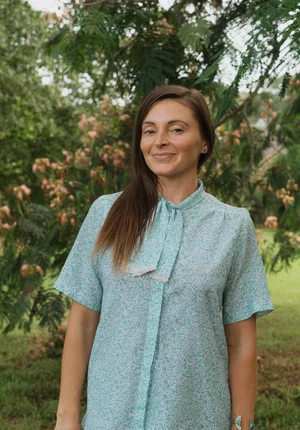
Dr. Sinéad Corrigan, LAc, DACM is a Licensed Acupuncturist and Doctor of Chinese Medicine, and the founder of Inner Body Data™. She specializes in cosmetic acupuncture, natural beauty, reproductive health, sports medicine, preventative medicine and the intersection of somatic movement practices and total body wellness. She sees patients in Chapel Hill, NC , seasonally in Kauai, HI, and [soon] Miami, FL.
There's a specific conversation I have with patients — almost exclusively women, almost always in their early-to-mid forties — that goes something like this:
"I'm not actually tired. I'm sleeping fine, I'm eating well, I'm doing everything right. But I look exhausted. Something changed in my face and I can't figure out what it is or how to fix it."
They're not imagining it. Something did change. And it's not what most aestheticians, dermatologists, or beauty editors will tell you.
Western medicine tends to explain this shift through the lens of collagen loss, bone resorption, and volume depletion — all of which are real and contribute to the change. But these explanations describe the mechanism without explaining the *why*. Why does this happen in the 40s specifically? Why does it seem to happen almost overnight in some women? Why does sleep, good nutrition, and a consistent skincare routine not reverse it?
Chinese Medicine has been asking and answering these questions for over two thousand years. The explanation is more nuanced, more personal, and — importantly — more actionable than anything the Western anti-aging industry tends to offer.
The 7-Year Cycles of a Woman's Life
The Huangdi Neijing — a foundational classical text of Chinese Medicine, written over two thousand years ago — describes the lifecycle of a woman in seven-year cycles. Each cycle marks a distinct physiological shift governed by the Kidney system, which in TCM oversees reproductive health, the aging process, bone, and what's called “Jing” — your constitutional essence, the deep reserve of vitality you were born with.
At 35 (the fifth cycle), the text notes that the “Yang Ming meridian” — which governs the face, as well as the Stomach Organ System — begins to decline. The face starts to lose some of its natural fullness. Hair may start to thin slightly. The skin loses a certain quality of brightness that was effortless in the 20s.
By 42 (the sixth cycle), all three “Yang meridians” that supply the face are described as declining simultaneously. This is the point where many women look in the mirror and notice that something has shifted. Not dramatically — but unmistakably.
This isn't a modern observation. It's two thousand years old. And it maps, with remarkable accuracy, to what women actually experience.
What "Tired" Actually Looks Like in Chinese Medicine
When a patient comes to me looking "tired," I'm not seeing one thing. I'm seeing a pattern — a constellation of signs that tells me something specific about the state of their inner resources.
In Chinese Medicine, the face is a diagnostic map. Every zone corresponds to a different organ system, and every change in color, texture, fullness, or line pattern carries information. Learning to read this map is one of the most profound and practical skills I've developed in clinical practice — and it's the foundation of what I teach in the Glow From Within natural beauty series.
Here's what the "tired" look tends to communicate:
*The area under the eyes reflects the Kidney system.* When Kidney Qi, Yin, or Essence is depleted — from overwork, chronic stress, poor sleep, or simply the natural progression of the cycles described above — the under-eye area becomes hollow, shadowed, or darkened. This is not a cosmetic problem. It's a sign of deep-level depletion. No eye cream will touch it because it doesn't originate in the skin.
*The quality of the skin's luminosity reflects the state of “Blood”*In TCM, ”Blood” (with a capital B, distinct from the Western medical concept) is the substance that nourishes, moistens, and gives luster to the skin. When Blood is deficient — which is extremely common in women in their 40s, especially those who are overextended, under-rested, or have heavy menstrual histories — the face loses its glow. It doesn't look damaged. It looks dim. Like a lamp with a slightly dying bulb.
*The lines between the brows and the tension held in the jaw* reflect the Liver system — specifically, the emotional history of the nervous system. Chronic frustration, suppressed anger, the particular exhaustion of trying to hold everything together: in TCM, these are “Liver stagnation” due to undigested emotions. When they're held in the body over years without discharge, they stagnate the flow of Qi through the “Liver meridian”. Over time, this stagnation shows in the face as habitual tension patterns — the furrowed brow, the tight jaw — that eventually become structural. Lines and changes in tissue tone that no injectable can address at the root. [For tips on how to address Liver system health today, check out my previous blog post on the relationship between the Liver and a dull complexion.]
*Subtle softening and loss of definition in the mid-face* often reflects Spleen Qi deficiency. The Spleen in TCM "holds" things in their place — it governs the muscles and connective tissue that support facial structure. When Spleen Qi weakens (often through overwork, irregular eating, chronic worry, or the natural changes of midlife), the face can develop a quality of slightly losing definition — not dramatic sagging, but a softening of the architecture that reads as "tired" even when the person feels fine. This is in part the cause of the dreaded jowl, in addition to chronic emotional and nervous system tension in the masseter and other surrounding facial muscles.
Together, these patterns create the picture: hollowed under-eyes, lost luminosity, deepening lines from habitual tension, softening structure. Not from one cause, but from several converging ones — all of which have names, diagnoses, and treatment protocols in Chinese Medicine.
The Root of It: Kidney Yin and the Concept of Jing
If there's one TCM concept that explains more of the midlife facial shift than any other, it's *Kidney Yin deficiency*.
Yin, in Chinese Medicine, is the cooling, moistening, nourishing, receptive principle in the body. It's the substance that keeps tissues hydrated and resilient, that moderates the heat of activity and stress, that allows for deep rest and regeneration. Estrogen, in Western terms, has a strongly Yin quality — which is why perimenopause, as estrogen declines, creates such a recognizable and rapid shift in how the face looks and feels.
When Kidney Yin is deficient, the body runs hotter, drier, and thinner. Skin loses its plumpness and moisture-retention capacity. The face develops a quality of subtle gauntness — not dramatic, but present. Night sweats, poor sleep, increased sensitivity, and a feeling of depletion that sleep alone doesn't fix are all signs of Kidney Yin deficiency. So is looking, as my patients put it, "more tired than I am."
Beneath Kidney Yin sits a deeper concept: “Jing”, often translated as "essence" or "constitutional vitality." Jing is what you were born with — your genetic endowment of life force. It cannot be replenished. It can only be preserved or spent. The activities that spend Jing fastest are the ones modern life is built around: chronic overwork, chronic stress, chronic sleep deprivation, excessive output without adequate recovery. Women in their 40s who've been running hard for twenty years often arrive at this decade with a significant Jing deficit — and it shows, specifically, in the face.
This is the part the anti-aging industry has no framework for. You cannot inject Jing. You cannot laser it back. The only strategies that work are the ones that slow its expenditure and support the organ systems that govern it.
Why Good Skincare, Sleep, and Diet Aren't Enough
This is the part that frustrates my patients the most. They're doing the things they're supposed to be doing. They're not neglecting themselves. And still, the face they see in the mirror doesn't match how they feel inside.
Here's the thing: topical skincare addresses the surface layer of the skin. Sleep supports overnight repair. Good nutrition builds the raw materials for cellular function. All of these matter and I'd never tell a patient to stop doing them.
But none of them fully address “Kidney Yin deficiency”. None of them alone will deeply nourish “depleted Liver Blood”. None of them “move Liver Qi stagnation” or “tonify (strengthen) weakened Spleen Qi”. These are systemic, internal patterns — and they require systemic, internal interventions.
This is what cosmetic acupuncture offers that no other facial treatment does: it addresses both the local (the face itself — collagen stimulation, muscle tone, lymphatic drainage, microcirculation) and the systemic (the organ patterns that are producing the changes in the face). A skilled cosmetic acupuncturist will treat your digestive system, your hormone axis, your stress response, and your sleep quality in the same session that they're treating your face. The results compound because the root cause is being addressed, not just the symptom.
It's also what a well-structured qigong practice offers. Certain qigong sequences specifically target Kidney nourishment — building and preserving Yin and Jing rather than spending it. The midnight-to-3am window (when, according to TCM, the Liver and Gallbladder are most active and the body most deeply repairs itself - read more in my Body Clock blog post) is protected by the sleep quality that consistent qigong practice builds. This isn't metaphor. It's one of the most well-researched mechanisms in the mind-body medicine literature.
What Actually Helps
If the picture I've painted resonates — if you recognize the pattern of depletion in yourself — here is where I would start:
*Nourish Kidney Yin and Liver Blood through food* Black sesame seeds, goji berries, mulberries, dark leafy greens, beets, kidney beans, walnuts, bone broth, and quality animal protein (particularly organ meats if you can tolerate them) are the foundation of Blood and Yin nourishment in TCM dietary therapy. These are not supplements — they're foods that you can build into daily life. Consistency over weeks and months is what moves the needle.
*Protect the repair window.* The Kidney and Liver (and Gallbladder, its ‘pair organ’) systems are most active between 5-7pm, 11pm-1am, and 1-3am in TCM's organ clock. Being asleep during this window — genuinely asleep, not scrolling in bed — is one of the most powerful anti-aging interventions available to you. It costs nothing. It is also, for many overextended women in their 40s, the hardest thing to actually do.
*Reduce Jing expenditure.* This means taking an honest look at your output-to-recovery ratio. In TCM, the body has a certain daily reserve of energy, and when you consistently spend more than you replenish, the shortfall is drawn from Jing. Practices that replenish rather than deplete — yin yoga, qigong, meditation, genuine leisure — are not luxuries. In TCM, they are medicine.
*Use acupressure to begin moving the stuck patterns.* *Kidney 3* (KD-3), found in the inner ankle between the ankle bone and the Achilles tendon, is the primary nourishing point for the Kidney system. Pressing and massaging it gently for a few minutes before bed is a small, consistent practice that over time supports the whole system. It is also excellent for the lymphatic system, which is crucial for detox and immune support. *Liver 3* (LV-3), in the webbing between the first and second toes on the top of the foot, is the master point for “moving Liver Qi stagnation” — helpful if you're carrying the kind of chronic tension that shows up between the brows and in the jaw.
*Consider a series of acupuncture treatments addressing both the constitutional pattern and the face.* This is where the most significant shifts happen — systemic work combined with local facial treatment. If you're in Chapel Hill, NC, [and soon] Miami, FL, or Kauai, HI, this is exactly what I offer in my clinical practice.
What Your Face Is Telling You
One of the things I find most moving about Chinese Medicine is this: the changes in your face are not random. They're not simply the accumulated damage of sun exposure and time. They're the story of how you've lived — what you've given, what you've held, what you've spent, what you've protected.
The hollowed under-eyes speak of a woman who has worked hard and rested little. The lines between the brows speak of a woman who has cared deeply and worried often. The softening of structure speaks of a woman whose reserves are asking, clearly and specifically, for replenishment.
Reading these signs — understanding what they mean and what they're asking for — is one of the most empowering things a woman in her 40s can do for herself. It turns a source of distress into a source of information. And information is actionable.
This is what Class 1 of the Glow From Within series is built around: learning to read your own face as a map of your health and your emotional history, understanding what each zone reflects, and beginning the somatic and energetic practices that start to shift those patterns from the inside out.
The face you have right now isn't the face you're stuck with. It's the face that's been shaped by the life you've lived so far. What happens next is up to what you do with that information.
Want a Deeper Dive?
The Glow From Within natural beauty series — a 5-class online masterclass beginning May 12 — covers TCM face reading, gua sha rituals, cosmetic acupuncture, beauty nutrition, and the hormone-and-aging connection in depth. Recordings available. Learn more and register here.
For a consistent, accessible qigong practice designed to age-in-reverse, nourish yourself, and build the inner resources that show on the face, join the Inner Body Data On-demand platform offering 150+ qigong, yin yoga, breathwork, and “embodied Chinese medicine” classes including dedicated Kidney-nourishing and yin-restorative sequences.
About the Author
Dr. Sinéad Corrigan is a Doctor of Acupuncture and Chinese Medicine, Licensed Acupuncturist, Board Certified Herbalist, and somatic movement instructor based in Chapel Hill, NC, Kauaʻi, HI, and [soon] Miami, FL. She offers in-person appointments as well as telemedicine, and has an On Demand Qigong + Yoga platform and YouTube channel for those who want guided embodiment practices rooted in Chinese medicine at home.
Connect with Dr. Sinéad ~ Empower yourself with Inner Body Data™
Join an in person class
Explore the On Demand Membership