Cosmetic Acupuncture vs. Botox and Fillers: What Your Dermatologist Won't Tell You
Doctor of Acupuncture & Chinese Medicine | Chapel Hill, NC • Kauai, HI • Miami, FL
I patient of mine came in for a natural beauty consultation a few years ago — a woman in her early forties, composed, clearly someone who had thought carefully about her appearance for a long time. She had been getting Botox since her mid-thirties and filler since her late thirties. She looked good. She was also starting to look like a different person.
She sat across from me and said: "I don't want to stop — but I feel like I'm on a treadmill I can't get off. And the more I do, the more I feel like I need."
That treadmill feeling is not her imagination. It's the picture of available options painted for many women. And it's worth understanding clearly.
I'm not someone who thinks any woman should feel guilty for the choices she's made about her appearance. But I do think most women making those choices have never been given the full picture. The actual lifetime cost. The risks that don't appear in the consultation brochure. The physiological effects of repeated use over decades. And the alternatives — real, science-backed alternatives — that the industry has no financial incentive to mention.
That's what I want to talk about today.
What Cosmetic Acupuncture Actually Is (and Isn't)
Cosmetic acupuncture — sometimes called facial acupuncture, facial rejuvenation acupuncture, or constitutional facial acupuncture — is a whole-body acupuncture treatment with specialised facial work. The key distinction from almost everything else in the beauty industry: it treats the person, not just the surface.
A typical session includes:
- Facial acupuncture points — fine needles placed in specific zones of the face to stimulate circulation, activate facial muscles, and trigger collagen and elastin synthesis through the body's natural wound-healing cascade.
- Constitutional body points — this is what most people don't expect. Points on the body that address the underlying systems showing up on your face: digestion, hormones, sleep quality, stress response, kidney and liver function.
- Gua sha, facial cupping, and/or facial massage — to support lymphatic drainage, reduce puffiness, and move stagnant qi and blood.
The result is not frozen. Not "done." It's a face that looks alive, rested, like yourself at your best — because the internal conditions that support vibrant skin have improved, not been overridden.
Western science has caught up to explain the mechanism: the micro-trauma of needling triggers fibroblast activity — the cells responsible for producing collagen and elastin. Controlled stimulation increases collagen synthesis measurably. Chinese medicine has known the effect for centuries and describes it through the lens of qi and blood circulation to the face — when circulation is full and free, the face reflects it.
What Cosmetic Acupuncture Can (and Can't) Address
Cosmetic acupuncture is well-suited for:
- Fine lines and superficial to moderate wrinkles
- Loss of skin tone, elasticity, and radiance
- Under-eye puffiness and mild hollowing
- Uneven skin tone, dullness, post-inflammatory hyperpigmentation
- Acne scarring (non-active)
- Adult hormonal acne (addressed systemically)
- Rosacea and skin reactivity driven by internal imbalance
- Mild to early moderate jowling
- Dry, depleted skin — especially what Chinese medicine calls Kidney and Blood deficiency patterns
- The nervous system dimension of aging: the chronic tension held in muscle and fascia that over time becomes structural
Where Cosmetic Acupuncture has real limitations:
- Severe structural volume loss that genuinely requires replacement — in these cases, I may discuss whether a small amount of strategically placed filler makes sense, and then work with cosmetic acupuncture to extend and support those results
- Significantly sagging skin (including extreme hooded lids) that would benefit from a surgical lift — I respect the full spectrum of options and will tell you honestly if I think you'd be better served elsewhere
- Severe cystic acne requiring medical management — I work alongside dermatologists in these cases, not instead of them
- Any lesion or skin change that needs dermatological evaluation — I am always the first person in the room to say "that needs to be looked at by a dermatologist," because nothing I do matters more than catching something early
The decision to refer out is not a failure — it's the mark of a practitioner who is treating a person, not just booking appointments. If you come in for a consultation and I don't think acupuncture is the right first step, I will tell you that.
The Lifetime Cost Conversation of Med Spa procedures
Let me show you the math. Not the per-session sticker price — the real number over a lifetime. Most women who begin Botox in their thirties have never calculated what they'll spend if they continue through to their seventies and beyond.
The math assumes a relatively typical usage pattern, not the high end. All figures are conservative estimates using current US market pricing.
Botox + Dermal Filler estimated Lifetime Costs (Ages 25 to 80)
Phase 1 — Ages 25–35 (10 years): Preventative Botox
Starting with preventative treatments in the upper face. Average 3 sessions per year at $500–700 per session (forehead, glabella, crow's feet).
Annual spend: approximately $1,700
Phase total: ~$17,000
Phase 2 — Ages 35–50 (15 years): Expanding Treatment + First Filler
More areas treated with Botox; adding filler for volume loss in cheeks, tear troughs, or lips. Average Botox: $900/visit × 4/year. Filler: 2 syringes × $1,200, twice yearly.
Annual spend: approximately $8,400
Phase total: ~$126,000
Phase 3 — Ages 50–65 (15 years): Increased Maintenance Demands
The skin has changed significantly; more sessions required to maintain appearance. Botox: $1,000/visit × 4/year. Filler: 3–4 syringes × $1,200, twice yearly. Possible addition of laser resurfacing or microneedling: $2,000–3,000/year.
Annual spend: approximately $14,400
Phase total: ~$216,000
Phase 4 — Ages 65–80 (15 years): Advanced Maintenance
By this phase, many patients add thread lifts, consider surgical options, and require substantial filler to address structural volume loss that has been compounded by years of muscle atrophy from Botox (more on this below).
Annual spend: approximately $10,000–15,000 (conservative)
Phase total: ~$150,000–$225,000
Total estimated spend, ages 25–80:
$509,000 to $584,000
That is a conservative estimate. Some women spend significantly more. The figure does not include: the cost of treating complications, touch-up appointments, products recommended by the med spa, or the expenses of any eventual surgical corrections.
Now, let’s compare the alternative
Cosmetic Acupuncture estimated Lifetime Costs (Ages 25 to 80):
My package pricing is $250 per session. A typical treatment plan is one initial series of 8–12 sessions, followed by maintenance packages of 8–12 sessions once to twice yearly — spaced seasonally, around life transitions, or simply when you feel you want to refresh.
The packages include everything: constitutional body work, lifestyle guidance, dietary and herbal recommendations when appropriate, and the qigong practices that do more for your face than any product on the market (more on that in a moment).
Phase 1 — Ages 25–40 (15 years): Foundation and Maintenance
Initial series of 10 sessions: $2,500. Annual maintenance: 1 package (10 sessions) per year.
Annual spend (after initial series): approximately $2,500
Phase total (including initial series): ~$37,500
Phase 2 — Ages 40–65 (25 years): Regular Seasonal Maintenance
One to two packages per year, averaging 10–15 sessions.
Annual spend: approximately $3,000–3,500
Phase total: ~$75,000–$87,500
Phase 3 — Ages 65–80 (15 years): Sustained Maintenance
With a deepened qigong practice, regulated nervous system, and the internal health improvements that have compounded over decades, your ability to age gracefully will show, and more than likely, your satisfaction with your appearance is also higher.
Annual spend: approximately $2,500
Phase total: ~$37,500
Total estimated spend, ages 25–80:
$150,000 to $162,500
The difference: $347,000 to $421,000 LESS THAN MED SPA TREATMENTS — for treatment that also improves your digestion, sleep, stress resilience, hormones, and the overall quality of your health.
There is no version of the Botox/filler model that pays dividends in your overall health. Cosmetic acupuncture is not a beauty expense. It is a health investment that shows on your face.
Eight Things Your Med Spa Won't Tell You
1. Botox causes muscle atrophy over time.
Botox works by paralyzing the muscle that causes the expression. With repeated use over years, the paralysed muscles lose mass — they atrophy. Less muscle = less structural support = more volume loss = more filler needed to compensate. The cycle is self-reinforcing, by design.
Cosmetic acupuncture does the opposite: it tonifies and activates facial muscles, building structural tone rather than reducing it.
2. Filler migrates.
Hyaluronic acid filler does not stay precisely where it is injected. Studies have documented filler migrating into surrounding tissue over months and years. The "pillow face" or subtle distortion you sometimes see in long-term filler users is frequently this migration. There is no guaranteed way to remove it entirely.
Your own collagen — stimulated by cosmetic acupuncture — stays exactly where your body puts it.
3. The skin barrier (and facial fat) is often damaged by aggressive treatments.
Lasers, aggressive chemical peels, and high-frequency microneedling sessions can disrupt the skin's microbiome and impair barrier function. Moreover, treatments that utilize high heat such as RF Microneedling can damage the healthy fat in the face that gives you that youthful “baby face” look. The paradox: you cause controlled damage to trigger repair — but if your body is nutritionally depleted, stressed, or poorly resourced, the repair is incomplete. I see patients who have been doing regular aggressive treatments and whose skin has become more reactive and sensitive over time, not less.
4. Lines have causes.
A furrow between the brows is not random. In Chinese medicine, that zone corresponds to the Liver — often chronic stress, suppressed frustration, or overwork. Treating it with a needle full of neurotoxin addresses the effect. Nothing changes about the cause. Six months later, you're back. This is the conversation I explore in detail in a dedicated session of my upcoming online Glow From Within: Natural Beauty Series — your face is a map, and learning how to read it will transform your relationship to not only how you care for your appearance, but how you care for your internal body, including emotional stress causing facial tension patterns.
5. Nobody has 30-year safety data on repeated cosmetic Botox use.
Botox is botulinum toxin — the most acutely toxic biological substance known. Cosmetic doses are small, but we are now in an era of women who have been using it continuously since their mid-twenties. There is no long-term clinical data on what 30 or 40 years of quarterly injections does to the nervous system, the muscles, or the surrounding tissue. This is not alarmism. It is an honest gap in the evidence base.
6. The med spa model is specifically designed to create dependency.
Results last 3–4 months — and will last less if you stop going, because the muscle memory returns. There is no incentive, structural or financial, for a med spa practitioner to address root causes, reduce your frequency of visits, or teach you anything you can do at home. The business model requires your return.
Cosmetic acupuncture specifically includes home tools — qigong facial massage, gua sha techniques, dietary guidance — because the goal is for your results to compound over time and require less intervention as your overall health improves.
7. The approach is the same for everyone.
At a med spa, you receive a menu. At a cosmetic acupuncture appointment, you receive a diagnosis. I assess your constitution, your emotional history, your sleep, your digestion, your hormones, the patterns on your face that tell me where your internal health is under strain. Two women of the same age with similar aesthetic concerns may receive completely different treatments because the source of what is showing on their faces is different. This is not a service you can standardize.
8. Your nervous system is doing more aging than your sunscreen is preventing.
This is the piece most skincare conversations miss entirely. Chronic stress drives cortisol. Cortisol degrades collagen faster than sun exposure in many patients. No topical treatment, and no injection, addresses the nervous system. Qigong, the “secret weapon” of the Chinese Medicine beauty world, does.
Cosmetic Acupuncture and Botox/Filler: Can They Work Together?
Yes — and I am happy to support you if you are a “tox-girlie” who just wants her results to last a bit longer and feel a little more relaxed!
Some of my patients have been using Botox or filler for years before coming to see me. I never judge that, and I do not ask them to stop. What I do is work with their existing baseline, with very specific timing:
- After Botox: Wait a minimum of two to four weeks before beginning cosmetic acupuncture to allow the neurotoxin to fully settle. Acupuncture in the first two weeks risks disrupting the distribution before it has stabilized.
- After Dermal Filler: Wait a minimum of four weeks before any needling in or around treated areas. The filler needs time to fully integrate and stabilise in the tissue.
- The longevity effect: Once the waiting period has passed, regular cosmetic acupuncture can measurably extend the results of both Botox and filler — by improving microcirculation (which helps filler integrate more smoothly and reduces swelling), stimulating your own collagen (reducing how much filler you need to achieve your desired look), and reducing the habitual muscle tension patterns that drive you back to Botox sooner. Many patients find their Botox intervals extend from three months to four or five months once their nervous system begins to genuinely regulate.
The goal, in my practice, is always to reduce dependency — not increase it. If working with me means you need your med spa appointments less often, I consider that a good outcome. For you, and ultimately for the health of your skin.
Qigong: The Most Underrated Anti-Aging Practice in the World
I want to close with this, because I think it is the most important thing I can tell you, and it is also the one that sounds the most implausible until you experience it.
Qigong is an ancient Chinese movement, breathwork, and meditation practice — slow, intentional, combining breath, posture, and internal awareness to regulate the nervous system, move qi through the meridians, and restore the conditions for healing. In the context of aging, it may be the single most powerful tool available.
Here's what the research actually shows:
- A landmark 2010 review in the American Journal of Health Promotion found that qigong practice produces significant improvements in bone density, cardiovascular function, inflammation, immune function, anxiety, depression, and quality of life. Every one of those systems is directly connected to how your skin ages.
- Studies on mind-body practices and telomere length — the work that earned Elizabeth Blackburn a Nobel Prize — show that chronic stress measurably shortens telomeres (the protective caps on your chromosomes that determine biological aging), and that nervous system regulation practices can slow or reverse that shortening.
- Research consistently shows qigong reduces serum cortisol and inflammatory markers including IL-6 and CRP — the same markers that drive collagen degradation, impaired barrier function, and inflammatory skin conditions. ([I discussed the cortisol-collagen connection in detail here](/blog/stress-skin-aging))
- Qigong improves microcirculation — the capillary blood flow to the surface tissues, including the skin. Better microcirculation means better delivery of nutrients and oxygen to skin cells, and better clearance of metabolic waste. Glowing skin is, in large part, a circulation story.
- Regular qigong practice shifts the autonomic nervous system from chronic sympathetic dominance (the stress response) toward parasympathetic tone (the rest-and-repair state). When your nervous system defaults to safety rather than threat, your facial muscles relax at baseline. Chronic expression lines — the ones carved by years of unconscious tension — begin to soften. This is not metaphor. It is neuromuscular physiology.
I see this in my students, and in myself. Women who have been practizing qigong consistently for a year look different — not in a way anyone can quite name, but in the way that the best kind of looking good shows up: they look present - easeful - Undeniably radiant.
Qigong is central to everything I teach inside the Glow From Within Series, and it is why I also created the Qigong On Demand membership because it is not just a cosmetic tool — it is a longevity practice that will help you age in reverse!
Where to Go From Here
If this conversation has landed and you want to take it further, here are your options:
On Wednesday, April 29th at 7pm EST, I'm hosting a free live masterclass: East vs. West: Why Natural Beauty Works Better and Costs Less Than Your Med Spa Habits Over a Lifetime. We go deep on all of this — the full lifetime cost breakdown, the eight risks the industry doesn't advertise, the science of cosmetic acupuncture, and a preview of the upcoming Glow From Within series. It's free. Register at innerbodydata.com/natural-beauty-courses
If you're in the Chapel Hill or North Raleigh area and want to explore a cosmetic acupuncture treatment plan specifically designed for you, I'd love to have a conversation. You can book a consultation here — we'll talk through your beauty and health goals, your history, and what a realistic treatment plan looks like for you. (I also offer this work seasonally in Kauai, Hawaii and [soon!] Miami, FL - be sure to follow me on IG and visit my Cosmetic Acupuncture site to catch me when I’m in town next!)
If you want to start with the foundational work — the nervous system, the organ-skin connection, the internal landscape that your face reflects — the Qigong On Demand membership is where I'd point you. Over 150 recorded classes, weekly livestreams, and the kind of whole-body practice that changes the face from the inside out.
Check out my other articles on holistic health + skincare:
- The Liver-Skin Connection: What Spring Tells Your Complexion — why the Liver is one of the most important organs for your skin
- The Chinese Medicine Organ Clock — learn about the golden “11pm–3am skin repair window”
- What Is Somatic Healing?— and why your nervous system care is the foundation of your beauty routine.
About the Author
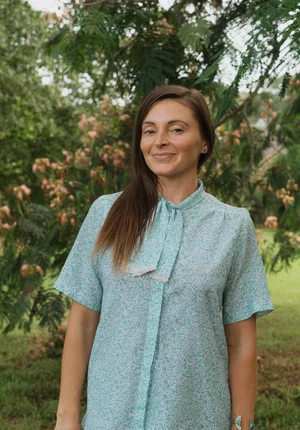
Dr. Sinéad Corrigan is a Doctor of Acupuncture and Chinese Medicine, Licensed Acupuncturist, Board Certified Herbalist, and somatic movement teacher based in Chapel Hill, NC, Kauaʻi, HI, and Miami, FL. She is the founder of Inner Body Data™ and creator of the Glow From Within natural beauty series. She offers in-person appointments as well as telemedicine, and and has a YouTube channel for those who want guided embodiment practices rooted in Chinese medicine at home.
Book a consultation , join an in person class, or explore the On Demand Membership
The content of this blog post does not constitute medical advice. Please consult a qualified healthcare provider for any personal health concerns or medical recommendations.