Somatic Healing: How Qigong & Acupuncture create Embodied Awareness
What Is Somatic Healing? A Complete Guide from a Chinese Medicine Doctor
Have you ever described your body as an enemy? Like so many, I myself began my healing journey with the thought, "I just wish I could climb out of my own skin." The desire to be “free” from the way my body looked and felt was so intense. Over 15 years later, I am here to report: your body is not the enemy - it is a deep, wise friend that will allow you to live the most fulfilled and joyful life possible, if only you can learn to listen to it…
Whether you struggle with anxiety, chronic pain, or exhaustion that feels like it has settled into you bones — but what we are all actually feeling is fundamental disconnection from our body, and our deepest self.
That disconnection is something I see in nearly every patient I work with. And it's exactly what somatic healing is designed to repair.
After 15+ years of studying and practicing Yoga, Qigong, and meditation, 6+ years of doctoral studies in Traditional Chinese Medicine, and 5+ years in clinical practice sitting with hundreds of patients in my clinics in North Carolina and Kauai, I've come to believe something simple and maybe a little radical: your body is not your problem. Your body is your greatest resource — if you know how to listen to it.
That belief is the foundation of everything I do at Inner Body Data. And somatic healing is one of the most powerful frameworks I use to help people come home to themselves.
What Is Somatic Healing?
The word "somatic" comes from the Greek soma, meaning body. Somatic healing, at its most basic, is any healing approach that works through the body — not around it or despite it.
In conventional medical and psychological models, healing is often treated as a cognitive process. Talk therapy asks you to understand your experiences intellectually. Many medications suppress symptoms in the body. Even well-meaning wellness advice tends to target the mind: think positive, reframe your thoughts, practice gratitude.
Somatic healing does something different. It recognizes that your nervous system, your muscles, your fascia, your breath — your entire physical body — holds the record of your experiences. Stress, trauma, grief, joy, and aliveness all live in your tissues, not just your thoughts.
Somatic healing uses body-centered practices — movement, breathwork, touch, awareness, and stillness — to help the nervous system regulate itself, release held tension, and restore a sense of safety and wholeness.
Common somatic healing modalities include:
- Somatic Experiencing (developed by Peter Levine)
- Somatic exercises such as shaking, grounding, and breath practices
- Movement-based practices like qigong, yoga, and dance
- Bodywork including massage, acupuncture, and craniosacral therapy
- Body scanning and interoceptive awareness practices
What they all share is a respect for the body's own intelligence — what I think of as body wisdom.
How Traditional Chinese Medicine and Somatic Healing Connect
This is where my background as a Doctor of Acupuncture and Chinese Medicine gives me a perspective I think is genuinely unique.
People sometimes assume TCM is about needles and herbs — a mechanical intervention you receive from a practitioner. But that misses the depth of the tradition. Classical Chinese Medicine is, at its core, a somatic medicine. It has always understood the body as an intelligent, self-regulating system whose physical symptoms are meaningful communication.
In TCM, every organ system has an associated emotion. The liver holds anger and creative vision. The kidneys store our deepest reserves of vitality — and fear. The heart houses shen, our spirit and consciousness. When those organ systems are out of balance, we feel it emotionally as well as physically. And when we carry unprocessed emotions, we feel them in our bodies.
This is not metaphor. This is the clinical reality I observe every single day.
When I needle acupuncture points, I'm not just addressing a physical symptom. I'm working with the body's energetic and nervous system architecture to help it reorganize toward health. The meridians — the channels through which qi flows in TCM — map closely onto the fascial and nervous system pathways that modern somatic researchers are now studying. The traditions converge.
I use somatic exercises as an integral part of my treatment approach, alongside acupuncture and herbal medicine. Qigong — the ancient Chinese healing movement practice — is one of the most sophisticated somatic healing tools I know. It cultivates body awareness, regulates the breath, moves qi through the meridians, and teaches you to feel your own inner landscape. Yin yoga works similarly, using long-held postures to access the deep connective tissue layers where stress and old emotions tend to live.
The thread running through both TCM and somatic healing is this: the body knows how to heal itself when given the right conditions. Our job — as practitioners and as people practicing at home — is to create those conditions.
The Benefits of Somatic Healing
I want to speak to this honestly rather than just list claims. What I observe clinically, and what the emerging research supports, is that regular somatic practice changes the relationship people have with themselves. From that shift, a lot becomes possible.
The most consistent thing I see is nervous system regulation. Most people who come to see me are living in some version of chronic fight-or-flight — not because anything is acutely wrong, but because the baseline has crept up over years. Somatic practices, especially breath-based and movement-based ones, directly activate the parasympathetic nervous system and move people out of that survival state into one where the body can actually restore itself.
Reduced anxiety usually follows. When the nervous system learns to feel safe in the body, anxiety loosens its grip — not through positive thinking, but through rewiring the physiological response at the tissue level. This is one of the most documented benefits of somatic healing and one of the clearest.
I also see significant trauma release and integration. Bessel van der Kolk famously wrote that "the body keeps the score." Somatic healing creates pathways for the body to complete stress responses that were interrupted — to finally put down what it's been carrying.
The benefit I care about most, though, is deeper body awareness and intuition. When you learn to feel the subtle signals of tiredness, hunger, joy, dread — you gain access to a form of information that can genuinely guide your life. I think of this kind of body literacy as preventative medicine. Not a metaphor. An actual clinical tool.
Many of my patients with chronic pain have also found real relief through combining acupuncture with somatic movement. Pain is often a signal, not just a symptom, and somatic work helps us hear and respond to it rather than suppress it. Improved sleep, digestion, and overall vitality tend to come as downstream effects — the natural result of a nervous system that's learned it's safe.
How to Start a Somatic Healing Practice
When patients ask where to begin, I always say the same thing: start with noticing. Before you add anything to your life, just start paying attention to what's already happening in your body.
When you wake up in the morning, pause for thirty seconds before reaching for your phone. What do you feel? Where is there tension? What is the quality of your energy? That's the beginning of body literacy, and it costs you nothing.
From there, add the simplest things first. Breath is the most accessible somatic practice there is — even five slow, deep breaths with your hands on your belly will shift your nervous system. Begin there, not with a 30-minute routine.
Gentle movement comes next. Slow spinal movements, shaking, joint circles — none of this needs to be complicated. I have free qigong and yoga videos on my YouTube channel if you want a guided place to start.
Once a day, spend five minutes scanning your body from feet to crown. Not to fix anything — just to feel. Notice sensation without judgment. Over time this practice alone shifts something real.
The most important variable is consistency, not intensity. Ten minutes every day will do more than an hour on the weekend. Build the habit before you build the depth.
And if somatic work starts surfacing things you didn't expect — old feelings, unexpected emotion — know that this is normal. It can also be a signal that you'd benefit from some support. Acupuncture, herbal medicine, and structured movement programs can all help deepen the process.
If you're looking for a guided path, my On Demand Membership at InnerBodyData includes qigong classes, yin yoga, breathwork, and somatic movement practices you can access from anywhere — designed for exactly this kind of daily, sustainable practice.
Somatic Healing Is Not a Trend — It's Ancient Wisdom
I have mixed feelings about somatic healing becoming a wellness buzzword. More people discovering these practices is genuinely good. But I want to be clear about something: the principles behind somatic healing are thousands of years old. Every ancient medicine tradition — Chinese medicine, Ayurveda, indigenous healing practices — understood that body and mind are not separate, that healing happens through the body, not despite it, and that the body's signals are trustworthy.
What we're doing now is recovering wisdom that got lost somewhere in a culture that decided rationality mattered and sensation didn't.
If you're new to somatic healing, you're not learning something novel. You're remembering something essential.
Frequently Asked Questions About Somatic Healing
What is the difference between somatic healing and somatic therapy?
Somatic therapy typically refers to a clinical therapeutic modality offered by a trained therapist, such as Somatic Experiencing or Sensorimotor Psychotherapy. Somatic healing is a broader term that encompasses self-directed practices, movement, breathwork, and body-centered approaches used both in clinical settings and at home. Many of the somatic exercises I teach in my classes and membership are things you practice independently — no appointment needed. [If you are seeking Somatic therapy, please use the link at the bottom of this webpage - I offer acupuncture at a somatic therapy practice in Cary, NC and can refer you directly to the therapists there]
Can somatic healing help with anxiety?
Yes, and this is one of the areas where I see the most consistent results in my practice. Anxiety lives in the nervous system, which means it has a physical address — and body-based practices can reach it directly. Breathwork, grounding exercises, gentle qigong movements, and body scanning all help regulate the nervous system and reduce the physiological experience of anxiety. Somatic healing doesn't replace therapy or medical care, but it is a genuinely powerful complementary tool.
How does Traditional Chinese Medicine relate to somatic healing?
TCM has always been a somatic medicine — it reads the body's signals (pulse, tongue, patterns of pain, emotional symptoms) to understand the whole person and support healing. Acupuncture works directly through the body's tissue and nervous system. Qigong, which originated within TCM, is one of the oldest somatic movement systems in the world. When I work with patients, I draw on both frameworks because together they offer a depth that neither provides alone.
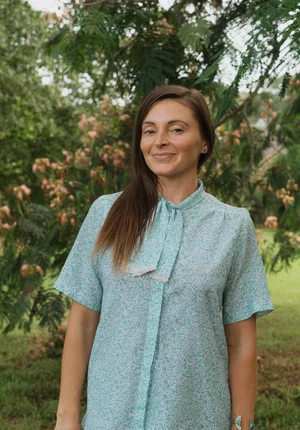
Dr. Sinead Corrigan is a Doctor of Acupuncture and Chinese Medicine, Licensed Acupuncturist, Board Certified Herbalist, and somatic movement teacher based in Chapel Hill, NC , Kauai, HI, and (soon!) Miami, FL. She offers in-person appointments and has a YouTube channel and an On Demand Membership for those who want to begin to explore guided somatic practices at home.
Ready to begin and seeking one-on-one support? Book a consultation (Chapel Hill, NC), visit me at the Flourish Center for Somatic Healing (Cary, NC), or explore the On Demand Membership to start your somatic healing practice today.