Fear of Aging: Why Your "Ideal Body" is Achieved and Aging Slows Down When You Stop Identifying With the Body
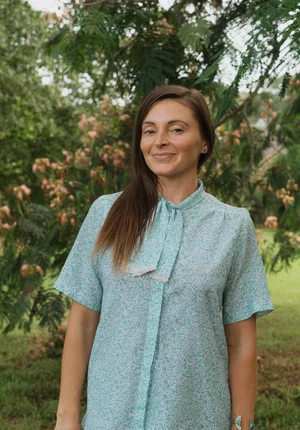
Dr. Sinéad Corrigan, LAc, DACM is a Licensed Acupuncturist and Doctor of Chinese Medicine, and the founder of Inner Body Data™. She specializes in cosmetic acupuncture, natural beauty, reproductive health, sports medicine, preventative medicine and the intersection of somatic movement practices and total body wellness. She sees patients in Chapel Hill, NC , seasonally in Kauai, HI, and [soon] Miami, FL.
An interviewer once asked (The Artist Formerly Known As) Prince something like, "How do you still look so young?"
His answer, paraphrased: "Oh, well, I stopped paying attention to time, so time stopped paying attention to me."
While we can't forget that the pop idol met an untimely demise due to the use of painkillers (a consequence of many years of jumping off platforms in high heels), he had a beautiful point.
Youth, in appearance, energy, and spirit, is not something we can merely calculate and biohack our way into.
Certainly the Bryan Johnsons of the world may disagree. But think about the most "youthful" person you know. Perhaps they don't even necessarily look young. But their energy? Timeless, unbound, and infectious.
As a cosmetic acupuncturist and board-certified Doctor of Chinese Medicine, I regularly work with people who want to both look younger and feel younger — healthier, more alive, more themselves. I meet people at the intersection of self-esteem, holistic healthcare, sustainability, and the worldview-and-values-reconfiguration work necessary to build a life where all three can actually coexist.
One of the most paradoxical things about my clinical approach is that, while I am employing mechanistic techniques to achieve a "youthful look" (such as motor-point needling in the muscles of the face to improve circulation and prevent wrinkles), I am simultaneously reminding every single person who walks through my door: "You are not your body."
"I am not my body" — What does this mean?
Many traditions of Eastern philosophy describe the body as “an experience within awareness”. We will explore this topic further, but first, an aside on “awareness” and “consciousness”.
Consciousness as Cosmology: The Taoist & Tantric Roots
According to Taoism, the underlying cosmology of the "elixir of youth" Qigong practices I both teach and prescribe, the body is a vessel for the development of consciousness. This is not a metaphor. It is the organizing principle of an entire ancient medical system.
The Taoist philosopher Lao Tzu wrote in the Tao Te Ching (Chapter 33): "知人者智,自知者明" — "Knowing others is wisdom. Knowing oneself is enlightenment." The entire edifice of qigong practice is built on this premise: that the deepest medicine is not applied from the outside in, but cultivated from the inside out.
This aligns with the foundational teaching of Kashmir Shaivism, a classical Hindu Tantric philosophical tradition, that consciousness or mind (Chit, or Cit) is not an emergent property of matter, but the primary reality from which all form arises. The 10th-century polymath Abhinavagupta, widely regarded as one of the greatest philosophers of consciousness in human history, described this as Prakāśa-Vimarśa: the universe as the self-luminous recognition of its own awareness. In his tradition, the body is not a limitation of consciousness; it is a crystallization of it, and therefore a doorway back into it.
The Buddhist tradition echoes this through the Heart Sutra's most famous teaching: "Form is emptiness, emptiness is form" (色即是空,空即是色). The body is not dismissed; it is recognized as non-separate from the formless awareness that perceives it. Presence, in this view, is not passive. It is a radical act of non-separation from what is.
"You Are Not Your Body" — And Yet Your Body Is Trying to Tell You Something
Consciousness is far too vast a topic for this blog post. But for the purposes of what follows, consider it simply as the capacity to be aware — to notice, to perceive, to feel from the inside.
How often have you (or a patient) followed a perfect health routine aligned with every latest research finding, timed to the hour, only to find yourself, months, days, or weeks later, back at square one?
Falling out of your "ideal protocol" or your "ageless skincare ritual" is not weakness, nor failure. Chinese Medicine and Qigong philosophy would say it happens because you are operating from what the tradition calls your inherited "Kidney energy," or ancestral Jing.
Jing (精) is a term from classical Chinese Medicine referring to the deepest constitutional essence of a person — the "root" of one's health and vitality. As we age, Jing is slowly depleted. Qigong and TCM aim to slow that depletion, and in some cases, replenish it. The Kidney system in TCM is said to store Jing (腎藏精, shèn cáng jīng), and chronic stress, poor sleep, overwork, and disconnection from the body are among its greatest depleting forces.
When survival instinct alone is in the driver's seat — the biological hunger cues, the hormonal urges, the reflexive reach for the familiar — we are running on habit alone. There is nothing wrong with following biological impulses. Pleasure and desire are a vital part of following one's Shen Ming (神命), or "Spirit Destiny” (a concept from Taoist philosophy I'll explore in a future post).
Where following survival impulses goes sideways is when we believe that the external result — the perfect body, the ideal partner, the smooth forehead, the cellulite-free thighs — contains the joy, fulfillment, happiness, and peace we are seeking.
Real youth, contentment, and limitless energy have only one source: presence.
The Neuroscience of Non-Identification: Dr. Shamil Chandaria
Modern neuroscience is arriving, from a very different direction, at the same conclusion.
Dr. Shamil Chandaria, PhD, Senior Research Fellow at the Centre for Eudaimonia and Human Flourishing at the University of Oxford, and Research Fellow at the Institute of Philosophy at the University of London, has spent decades bridging computational neuroscience with the contemplative traditions of Buddhism, Vedanta, and Kashmiri Shaivism. His work centers on what is known as the Bayesian Brain or predictive processing model of consciousness: the understanding that the brain does not passively receive reality, but actively constructs it based on prior expectations and learned predictions (Chandaria, Computational Neuroscience and Human Flourishing, The Trip Report).
What meditation (and by extension, qigong) does, according to Chandaria, is begin to loosen the brain's grip on its habitual top-down predictions. The stories we tell about ourselves. The anticipatory anxiety. The compulsive mental commentary. The chronic vigilance. These are not reality; they are the brain's model of reality. And they come at a biological cost.
As Chandaria describes it, practices like meditation and qigong systematically reshape the brain's predictive processes, reducing the energy devoted to threat-maintenance and opening space for genuine flourishing (Psychedelic Society, "The Science of Awakening"). In the Kashmiri Shaiva tradition he draws on, this is described as Spanda: the pulsation or throbbing aliveness that is the natural state of consciousness when it is no longer contracted by fear or grasping to the familiar.
In other words, what ancient practitioners called "releasing identification with the body" is, in modern neuroscientific terms, reducing the brain's chronic prediction of threat. And when that threat prediction relaxes, the body can finally repair.
Why Presence is Power: TCM's Theory of Qi, Blood, and Consciousness
According to TCM theory, "Qi is the commander of Blood" (氣為血之帥, qì wéi xuè zhī shuài). Qi — which can be understood as life-force or bioelectrical vitality — infuses whatever we direct our attention toward. The classical maxim: "Where the Mind goes, Qi goes" (意到氣到, yì dào qì dào). And: "When Qi moves, Blood moves" (氣行則血行, qì xíng zé xuè xíng).
This creates a direct chain of causality: Consciousness → Qi → Blood → Cellular nourishment.
When aware attention is brought to the felt sense of, say, the heart (try it now, if you'd like) Qi arrives there, and Blood follows. With blood comes oxygen, nutrients, hormones, and the biochemical signaling molecules that tell cells to regenerate and repair.
What is tension, in this framework? A blockage of life-force. When Qi stagnation occurs as a result of chronic stress, emotional suppression, or disconnection from the body, blood flow to the affected tissues decreases. The cells receive less of what they need. Repair slows. Aging accelerates.
The TCM canon also holds that "the Heart governs the Shen" (心主神明, xīn zhǔ shén míng) — the spirit, the consciousness, the integrating awareness that animates the entire organism. A Heart whose Shen is unsettled, scattered by anxiety, fragmented by overload, or disconnected by the relentless demand to look a certain way — is a Heart that cannot lead the body into repair.
"Form and Spirit are one" (形神合一, xíng shén hé yī). The separation of the two, treating the body as a machine to be optimized while the “spirit” remains unaddressed, is the root of dis-ease, according to TCM.
What the Research Actually Shows
Ancient wisdom cannot be reduced to a collection of citations; TCM is an empirical science based on thousands of years of observation of body, Nature, and their relationship. However, the small portion of research I will share here echos what older cultures have known for millennia.
Qigong and Telomeres: The Clock at the End of Your DNA
Telomeres are the protective caps at the end of chromosomes, often described as the "biological clock" of the cell. As they shorten with age and stress, cellular function declines. Telomerase is the enzyme that rebuilds them.
In a randomized controlled trial published in the Annals of Behavioral Medicine, qigong practice was shown to raise telomerase activity in individuals with chronic fatigue, raising the possibility of telomerase as an important biomarker for mind-body interventions (Oxford Academic, Randomized Controlled Trial of Qigong Exercise on Telomerase Activity, 2012).
A separate study on qigong's effect on telomere length found that “transmitting Qi” from qigong masters, Qi-invigorating herbs, and from physical fields that mimic Qi, all produced measurable telomere lengthening in both cell cultures and mice, suggesting a shared mechanism for Qi's effect on retarding cellular aging (Biomedical Research, Preliminary Study of the Effects from Different Sources of Qi on Telomeres).
A randomized, wait-list controlled trial of a qigong intervention in women under chronic stress found significant improvements in telomerase activity and reductions in psychological stress, suggesting qigong's anti-aging effects may operate partly through the telomere maintenance system (Academia.edu, Effect of a Qigong Intervention Program on Telomerase Activity and Psychological Stress).
Qigong and Cortisol: Calming the HPA Axis
The HPA (hypothalamic-pituitary-adrenal) axis is the body's central stress-response system and its primary output, cortisol, is one of the most well-documented drivers of accelerated aging. As I explored in depth in How Your Nervous System Shows on Your Face, chronically elevated cortisol destroys collagen, suppresses skin repair, and closes the body's overnight regeneration window.
A pilot randomized controlled trial of medical qigong found a significant reduction in plasma cortisol in the qigong group — from 11.8 μg/dL to 8.8 μg/dL — while the control group showed no change (Gavin Publishers, Effects of Medical Qigong on Plasma Cortisol in Healthy Adults).
A study in healthy older adults found that qigong training reduced both basal cortisol levels and cortisol reactivity to mental stress, specifically blunting the cortisol spike in response to cognitive challenges. The researchers described this as evidence of "better adaptation to stress" that may favor "successful aging and positive health outcomes" (Academia.edu, Qi-Gong Training Reduces Basal and Stress-Elicited Cortisol Secretion in Healthy Older Adults).
A systematic review of randomized controlled trials confirmed that qigong has significant effects on stress reduction compared to no-intervention controls, stretching, and even cognitive-behavioral therapy (MDPI Healthcare, Qigong Therapy for Stress Management: A Systematic Review, 2024).
The "Deep Rest" Model: UCSF Research on Why Mind-Body Practices Work
One elegant scientific framework for understanding all of this comes from UCSF researchers Dr. Alexandra Crosswell and Dr. Elissa Epel, whose 2024 paper in Psychological Review introduced the "Deep Rest" model of contemplative practice.
Their core argument: mind-body practices work by signaling safety to the nervous system, which shifts the body's cellular energy allocation from threat maintenance to repair and restoration. When the threat response is chronically activated, as it is for most people living modern lives, the cells are burning energy maintaining vigilance. That energy cannot simultaneously be used for regeneration.
When practices like qigong, meditation, or yoga are performed with enough regularity and depth to actually down-regulate the threat response, the body enters a state of "deep rest" that is distinct from ordinary relaxation. And in that state, cellular rejuvenation processes activate, including telomere maintenance, immune regulation, and mitochondrial repair (PMC, Deep Rest: An Integrative Model of How Contemplative Practices Combat Stress and Enhance the Body's Restorative Capacity, 2024).
This is exactly what TCM has been describing for two thousand years. The Qi must flow. The Shen (“spirit”) must be settled. The body's healing intelligence, its innate capacity for self-renewal. cannot operate in a field of chronic fear.
Making It Practical
Will one day of "placing consciousness inside your body" measurably slow your aging? At the cellular level — imperceptibly, yes. Experientially — maybe not immediately. You may feel more relaxed, or you may realize, for the first time, how tense you actually are, which may actually feel like a rude awakening rather than an experience of relief. Either way, this is not a one-and-done protocol.
As the Taoist tradition reminds us through Wu Wei (無為) — effortless, non-striving action — the most powerful transformations are not forced. They are allowed, through consistent, humble, and dedicate practice over time.
To put it another way: will one day in the gym give you strong muscles? Of course not.
But what happens when you practice qigong daily for months? What happens when you come for cosmetic acupuncture for many weeks in a row, experiencing repeated blood flow to the structures in the face that are holding your emotional and physiological tension? What happens when the brain's “prediction of threat” begins to relax over time?
This is what some people call magic. It's not magic. It is the miracle of your body's intelligence. Ancient and modern wisdom give us a framework to meet that intelligence with presence, rather than force.
The Bottom Line
Can you feel blissfully alive and look older than your years? Absolutely.
Can you look stunning and feel anxious, depleted, and disconnected from yourself? Most certainly. I was more ungrateful and disconnected from aliveness at the glowing age of sixteen than I am now at thirty-six.
The fear of aging is, at its root, a fear of impermanence — what Buddhism calls anicca. And the antidote, across every wisdom tradition that has seriously engaged with this question, is the same: presence. Not the presence that tries to freeze time, but the presence that relaxes into it so completely that the body's own intelligence has room to work.
When you stop trying to make your body look or perform in a specific way to be "correct," something remarkable happens: you can actually feel your body. And the body, as TCM philosophy asserts, is not just flesh and bone. It is a complex web of dynamic forces, inextricably enmeshed with the fabric of Nature itself. Listening to the body via “placing conscious awareness inside it”, is an act of re-harmonization with Nature. And the most fundamental teaching of Chinese Medicine is that health and happiness are the natural result of this harmony. Circadian rhythm disruption is one of the largest areas of research when it comes to preventing illness that results from aging for a reason (read my blog post on the TCM Body Clock to learn more) — our bodies evolved within the framework of the lights, sounds, smells, tastes, and temperature changes of our environment. To neglect both the inner and outer listening necessary for harmony is also to neglect the capacity for our body to not just survive, but thrive.
So, if you are afraid of aging: start placing your mind inside your body. Over time, your consciousness will bring the Qi flow, the blood flow, and the self-healing intelligence to every cell. The body wants to repair itself and thrive for as long as possible. We simply have to create the conditions — the deep rest, the presence, the safety — for it to do so.
Not Sure Where to Start?
My Qigong On Demand Membership has everything you need to establish a daily "inner body listening" practice — from foundational qigong sequences to targeted practices for emotional processing and nervous system regulation.
Join Glow From Within — a 5-week natural beauty masterclass series, where we go deep on the TCM principles, at-home practices, and embodied consciousness-based approaches to natural beauty and healthy aging.
Looking for one-on-one support?
Sign up for an initial consultation to become an acupuncture patient: currently accepting patients in Chapel Hill, North Carolina, Kaua'i, Hawaii, and (soon!) Miami, Florida.
Sign up for a private qigong lesson (online + seasonally in-person)
Join the waitlist for my group-coaching Telemedicine practice, rooted in Traditional Chinese Medicine, Qigong, Yogic, Buddhist, and Hindu Tantric philosophies, and modern scientific research — to optimize the health of your body, mind, and spirit. [Email info@innerbodydata.com with the subject line WAITLIST to be notified of the next cohort opening. No spam emails, just program notifications].
Research & Sources
Preliminary Study of the Effects from Different Sources of Qi on Telomeres — Biomedical Research
Effects of Medical Qigong on Plasma Cortisol in Healthy Adults — Gavin Publishers
UCSF: Why Do Mind-Body Practices Work? The "Deep Rest" Model — AME Center, UCSF
Shamil Chandaria: Computational Neuroscience and Human Flourishing — The Trip Report
Shamil Chandaria: Awakening, Neuroscience & Flourishing — With Reality in Mind