What Chinese Medicine Teaches Us About Aging Gracefully: Cosmetic Acupuncture, Qigong, & Redefining What “Healthy” Means
Learn why skincare not enough to preserve your youthful glow. In this blog post, understand the whole-body relationship to how we age, and what you can do to maintain maximum vitality, health, and beauty.
Let me say something that might feel a little uncomfortable at first.
Most of us, myself included for many years, have been operating under a version of "healthy" that is shaped almost entirely by Western cultural messaging. Eat clean (or restrict). Exercise hard (or more often). Take your supplements. Use the right serums. And yet, for many women I see in my practice who follow these "healthy rules", the face shows a different story. The skin looks dull or deflated. There are shadows under the eyes that sleep doesn't fix. The jawline is fading. The glow they remember from their twenties has quietly gone missing.
The frustrating part is that many of these women are doing things right, by Western standards. They exercise regularly. They're thoughtful about their diet. They buy high-quality skincare. And still: the face.
Here is what Chinese Medicine has known for over two thousand years, and what integrative skin science is now beginning to confirm: your aging face is not a surface problem. It is a whole-body equation. And the solution requires looking far deeper than the dermis.
What the Huangdi Neijing Tells Us About Aging
The Huangdi Neijing, a foundational classical text of Chinese Medicine written over 2,000 years ago, opens with one of the most elegant frameworks for understanding human aging ever recorded. In Chapter 1, it describes the 7-year cycles of women and the 8-year cycles of men, mapping how the body's constitutional energy changes over a lifetime.
For women, it goes like this:
- Age 7 (1×7): Kidney energy matures. The hair grows thick, the permanent teeth come in.
- Age 14 (2×7): Tiangui (天癸) — the essence that governs hormonal development — arrives. Menstruation begins. The body reaches reproductive maturity.
- Age 21 (3×7): Kidney energy peaks. Physical development is complete.
- Age 28 (4×7): Sinews and bones are at maximum strength. Hair is fullest. The physical body is at its zenith.
- Age 35 (5×7):The Yang Ming channel begins to decline. The face starts to wither. The hair begins to fall.
- Age 42 (6×7): Three Yang channels of the face are declining. The complexion becomes sallow. The hair begins to grey.
- Age 49 (7×7): Tiangui is exhausted. Menstruation ceases. The body begins its next phase.
For men, the same pattern plays out in 8-year increments, peaking at 32, with "Yang Ming" (we'll talk about what that means shortly) decline beginning around 40.
Within this simple framework is also an implicit teaching: if you want to change the timeline, you need to understand the mechanism.
The mechanism influencing aging, beginning at age 35, is the Yang Ming channel.
The Yang Ming Channel: Why 35 Is the Turning Point
The Yang Ming channel, which includes the Stomach meridian (足阳明胃经) and the Large Intestine meridian (手阳明大肠经), is considered the most “Qi- and Blood-rich” channel in the body. It is the primary channel responsible for nourishing the face, supplying the skin with the Blood and fluids needed for luminosity, fullness, and elasticity.
When the Neijing says "the Yang Ming channel begins to decline" at 35 (5×7 for women), it is describing the gradual dimming of the body's most important facial nourishment pathway. And the consequences are visible: the skin begins to lose its glow. Nasolabial folds deepen. The under-eye area hollows. The face sags.
This is not just cosmetic. This is a gradual consuming of your vital energy.
I wrote about the 7-year cycles and why women in their forties so often feel and look depleted in more depth in this blog post. If you haven't read it yet, it is worth reading alongside this one, because understanding the how to replenish the "root Kidney energy", as discussed in my previous post, is the first step to boosting overall vitality, thus slowing the progression of aging.
The key question is: what depletes the Yang Ming channel faster than it needs to go? And the answer, as we'll explore below, has everything to do with how we eat, how we move, and how we manage (or fail to manage) our stress and internal resources.
The Yang Meridians of the Face — A Map of Aging
Before we go further, let me give you the full picture of which "meridians" travel through the face. A meridian is a pathway in the body that can show signs of imbalance of an internal organ non-locally. The 6 major Yang meridians run from hands to face (Small Intestine, "Triple Burner", and Large Intestine meridians) and face to feet (Bladder, Gallbladder, Stomach meridians). Western science is slowly starting to understand them as an aspect of the connective tissue pathway dynamics (fascia research! More on this topic at a later date). Each meridian governs a different region of the face and a different pattern of aging.
Stomach Meridian (足阳明胃经) — The Yang Ming Channel
This is the primary nourishment channel of the face, running from below the eye, through the cheek, jaw, neck, and chest, all the way down to the foot. It governs the fullness and tone of the central and lower face — the cheeks, nasolabials, jawline, and chin. When Stomach Qi is strong, the face is full and radiant. When it is depleted through poor digestion, chronic dieting, irregular eating, or emotional suppression at mealtimes, the face sags, hollows, and loses its color. The classic "tired, gaunt face" is often a Stomach channel depletion pattern.
Large Intestine Meridian (手阳明大肠经)
Running from the index finger up the arm, through the shoulder, neck, and cheek to the opposite nostril, the Large Intestine governs elimination, detoxification, and the clearing of heat from the skin. When elimination is sluggish and toxins accumulate, this shows in the skin as dullness, congestion, possible redness from systemic inflammation and congested breathing (the Large Intestine is a "pair" of the Lungs - when one is struggling, the other is also affected), and tension in the SCM (sternocleidomastoid muscle in the neck). Further, the link between gut health and skin clarity that integrative dermatology now widely acknowledges has been mapped in the Large Intestine channel for thousands of years.
Gallbladder Meridian (足少阳胆经)
Zigzagging across the temples and side of the head before descending the lateral body to the foot, the Gallbladder channel governs the temples, outer eye, lateral face, and jaw. It is associated with decision-making, frustration, and the Wood element — meaning that unresolved resentment, chronic indecision, and suppressed anger tend to show in the lateral face first: temporal tension lines and a tightened jaw. It is not a coincidence that the women who report jaw clenching are often the same ones whose lateral face ages most visibly.
Triple Burner / San Jiao (手少阳三焦经)
Traveling from the ring finger up the arm, around the ear, and ending at the outer eyebrow, the Triple Burner is a name for the function of governing fluid metabolism and the regulation of heat throughout the entire body. It is central to the appearance of puffiness as it strongly impacts circulation in the whole body. When Triple Burner function is impaired, often by chronic stress, hormonal dysregulation, or poor sleep, fluid distribution becomes erratic: puffy in the morning, dull by afternoon, inflammed without obvious cause.
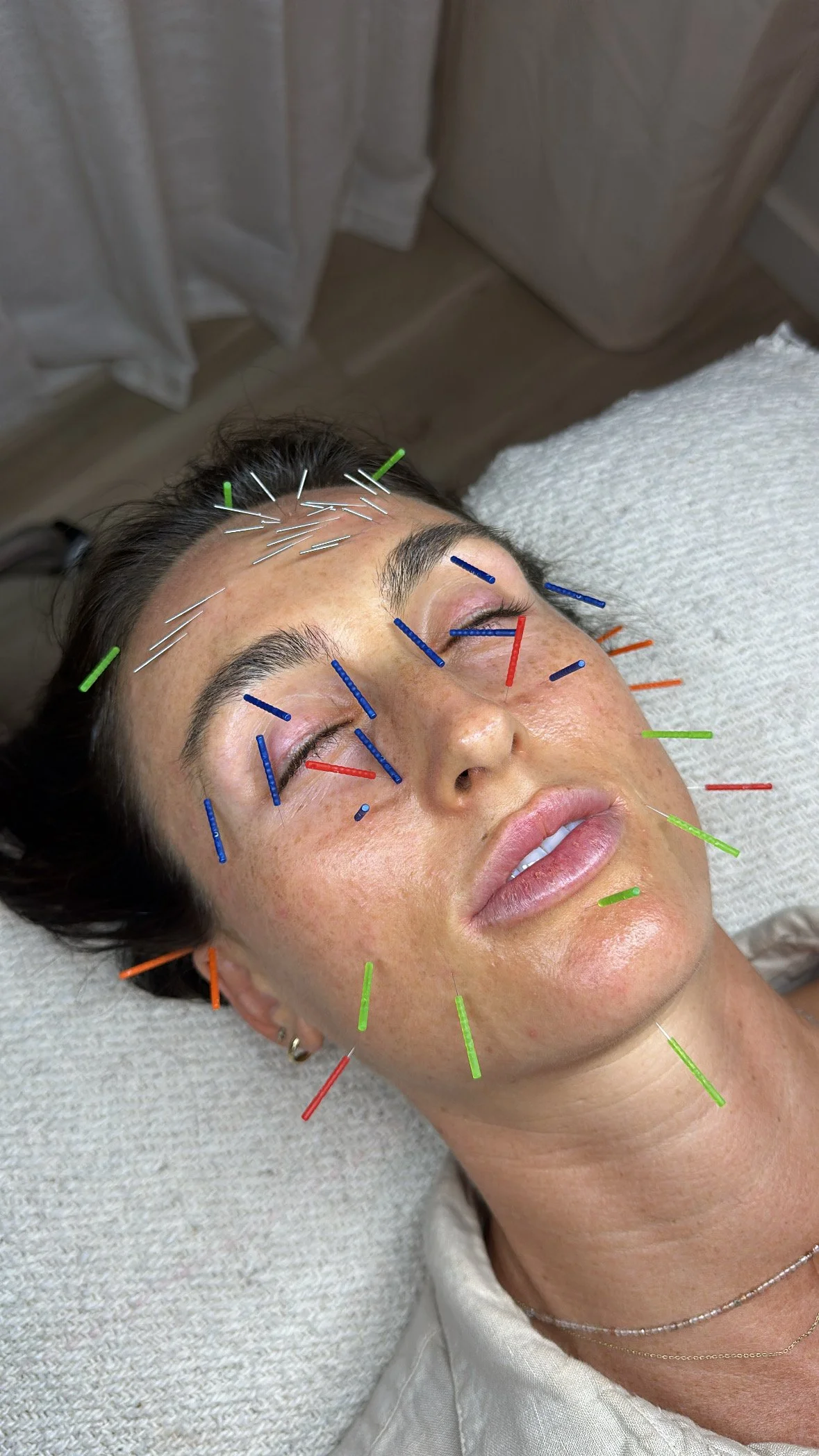
Each of these Yang channels, when nourished and flowing, produces a quality of facial vitality. And when each is depleted, it leaves a different pattern of aging in its wake. This is exactly why cosmetic acupuncture is not a surface treatment; it is a full body treatment. The needles work with these pathways, via points on the face as well as the arms, legs, hands, feet, and abdomen.
Yin and Yang: The Two-Way Relationship Between Foundation and Expression
In Chinese Medicine, the "Yin" (feminine qualities; nourishment) and "Yang" (masculine qualities; the energy we put out by burning what nourishes us) of the body must be in dynamic balance for vitality of body and skin to express itself fully.
The "Yin" of the body (Kidney Yin, Liver Blood, the "Body Fluids" - all Chinese Medicine terms we will unpack over time on this blog - stick around to learn more!) is the deep, nourishing, moistening foundation. It is what keeps the skin plump, the eyes bright, the tissues hydrated. The Yang of the body (the warming, moving, rising energy) depends on this foundation to ascend to the face and animate it with color, glow, and tone.
When Yin is depleted, Yang cannot rise to the face. This is the classic presentation of a woman in her forties who describes looking "washed out" or "flat". The underlying nourishment is insufficient, and the energetic brightness that should animate the face has nothing to rise on. The result is a face that looks dull, grey, or simply tired, regardless of how well-rested she actually is.
When Yang is depleted, the Yin becomes stagnant and damp. This is the woman whose face is puffy, whose jawline is indistinct, who wakes up with bags under her eyes and a heaviness that doesn't clear until midday. Without adequate Yang to transform and move fluids, the nourishing substances of the body accumulate in the wrong places rather than circulating where they are needed.
Both of these are common presentations in women between 35 and 55, and both require completely different approaches. This is precisely why the same cosmetic acupuncture protocol cannot and should not be applied to every person. Constitutional and individualized diagnosis is not a nicety in this medicine. It is the entire point.
What Cosmetic Acupuncture Actually Is — And Why It Begins in the Whole Body
Here is something that surprises many of my clients when they come in for their first cosmetic acupuncture session: we do not begin with the face.
A cosmetic acupuncture treatment at Inner Body Data begins with a full health history intake. I am looking at your tongue, feeling your pulse (both unique diagnostic tools of Chinese Medicine), your patterns of sleep and digestion, your hormonal cycle, your stress patterns, the quality of your skin in specific zones, and the state of each of the organ systems that Chinese Medicine considers foundational to facial health. From there, every session is tailored to that person on that day as the body changes.
After the intake, the body points come first. "Kidney points" on the ankles inner calves, torso, and chest to restore the deep yin foundation. "Spleen and Stomach points" on the feet, legs, and belly to ensure the "Foot Yang Ming channel" (Stomach meridian) is receiving adequate Qi and Blood. "Liver points" on the feet and near the diaphragm to move stagnation and release emotional tension. "Triple Burner points" on the arms to regulate fluid distribution and reduce inflammation. Only once the body is oriented toward repair and circulation does the treatment address the face locally.
Only once full body health and nervous system regulation have been addressed do I add facial needles, followed by Gua Sha, facial cupping, and facial massage techniques that work with the now-opened meridian pathways.
This approach is not a compromise between holistic medicine and aesthetics. It is the aesthetic treatment — because the face will only be as vital as the inner body that supports it.
Yang Shen: The Practice of Nourishing Life
One concept that does not translate easily into Western wellness culture that many people have never heard of is called Yang Shen (養神), referring specifically to the nourishment of the Shen, or "spirit".
Yang Shen literally means "to nourish life" or "to preserve vitality." It is the practice of tending to your fundamental constitutional resources — Jing (your "essence", often related to the vitality of the hormone health and our genetic inheritance, Qi (vital energy, what we "do" with the Jing), and Shen (spirit; the way we uniquely shine the light of our vitality out into the world) — in a way that prevents their unnecessary depletion over time.
In qigong and classical Chinese Medicine, Yang Shen is not a passive concept. It is an active daily practice of how you spend your energy. The Neijing is explicit about this: premature aging comes not only from external invasion or genetic fate, but from the way we live — from irregular eating, emotional excess, overwork, sexual depletion (heavy menstruation, improper recovery from pregnancy, and excessive ejaculation), and the failure to rest in accordance with the seasons and the body's natural rhythms.
Some simple Yang Shen practices you can begin integrating right now:
Rest as a non-negotiable. Sleep before midnight. The Gallbladder and Liver do their renewal work between 11pm and 3am according to the organ clock. Missing this window consistently is one of the fastest ways to age the face. If the body is not resting during this time, or you've eaten too close to bed, the blood does not pass through liver, important for proper detoxification and cellular repair. The nervous system (also related to the liver in TCM) also does not receive adequate recovery for the body to perform these repairs. The face then reflects this via dullness and tension patterns.
Eat warm, cooked, and regular meals. Cold, raw foods or meals at irregular intervals are among the most common ways the Stomach Qi becomes depleted in modern Western women. The stomach needs warmth to transform food into the Qi and Blood that nourish the Yang Ming channel (which remember, is the main meridian responsible for showing significant aging on the face). Smoothies, salads, and cold drinks consumed quickly while standing over a sink are not nourishment. Over time, weakened digestion leads to poor nutrient absorption, and poor quality blood flowing to the face.
Qigong for Kidney Jing preservation. Slow, gentle, "kidney-strengtening qigong" such as the Eight Brocades (Baduanjin), standing meditation (Zhang Zhuang), "Kidney breathing", or gentle spinal undulation practices build and preserves the deep Yin foundation that allow Yang to rise beautifully to the face. If you are already a member of the Inner Body Data on-demand library, Kidney Qigong and Daily Practice categories are a good place to start. [Try a free Kidney Qigong preview here]. In my experience, Qigong is where you’ll really start to see the needle move on your stress and rate of aging.
Stillness and nervous system regulation. Yang Shen includes the cultivation of a stable, peaceful Shen, or "spirit". Think of your Shen as the spark of ALIVENESS in your eyes. Chronic anxiety, rumination, and emotional volatility consume Qi and Blood (a form of Yin). This is not a moral judgement; it is a physiological reality. Practices that genuinely regulate the nervous system and allow for emotional digestion are Yang Shen practices. [Check out my Locating Emotions in the Body Course or Qigong for Emotional Healing for a deep dive into this work - scroll down to the bottom of the page to view the courses]
The Part That No One Wants to Talk About: The "Healthy" Habits That Are Depleting Your Face
Now for the uncomfortable piece.
There are two patterns I see repeatedly in my practice that are almost entirely shaped by Western cultural messaging about what "healthy" looks like, and both of them age the face prematurely by depleting the Yang Ming energy.
Pattern One: Over-exercise and/or under-nourishment.
The woman who runs five times a week, goes to intense spin or HIIT classes, lifts heavy, and eats carefully (meaning restrictively) is, from a Chinese Medicine perspective, consuming her constitutional reserves at an accelerated rate. Vigorous exercise generates Yang, produces heat, and expends Qi. Without generous and consistent replenishment through nutrition, and a recovery of the nervous system via deep relaxation, the body is drawing on Jing — the hormonal vitality — to meet the energy demand. Jing, once depleted, does not easily replenish.
The result: a lean, fit body and a face that looks hollowed, dull, or inexplicably older than its years. I see this regularly. The skin loses its plumpness because the fat pads of the face depend on adequate Qi, Blood, and yin fluids to maintain volume. Collagen synthesis requires amino acids, vitamin C, zinc, and copper, none of which are sufficiently supplied by a calorie-restricted diet that prioritizes lightness over nourishment, nor a routine that is solely focused on exercise and consuming larger amounts of calories (which is hard on the digestive system), with no time for nervous system practices.
Pattern Two: Using food as stress management without actually nourishing.
The other end of the spectrum is equally common and equally misunderstood. For many people, food is the primary available comfort in a life that doesn't leave much room for genuine rest. This isn't a failure of willpower, it is a nervous system strategy in the absence of other tools. But the foods that comfort, such as processed carbohydrates, sugar, alcohol, and dairy, tend to generate "dampness and phlegm", Chinese Medicine terms that indicate there is a stagnation of fluid in the body. This weakens the digestive system and impairs the body's ability to transform food into usable Qi and Blood.
From a biochemical standpoint, diets high in processed foods and low in whole-food micronutrients create specific deficiencies that show in the face:
- Vitamin C deficiency impairs collagen synthesis — the hydroxylation of proline and lysine requires ascorbic acid as a co-factor. Without it, collagen is weaker and less abundant.¹
- Zinc deficiency impairs wound healing, reduces keratinocyte proliferation, and is associated with increased inflammatory skin conditions.²
- Iron deficiency reduces oxygen delivery to skin tissue and is one of the most common causes of pallor, dullness, and hair thinning in women over 35.³
- Vitamin A deficiency down-regulates fibroblast activity, reducing both collagen and elastin production.⁴
- Magnesium deficiency (almost universal in Western populations) — impairs sleep quality, elevates cortisol, and drives systemic inflammation that degrades skin matrix proteins.⁵
- fatty acid insufficiency compromises the skin barrier, increases transepidermal water loss, and contributes to the "crepey" texture that many women notice first at the temples and under the eyes.⁶
All of this connects back to the Stomach meridian and the Yang Ming channel. In Chinese Medicine, the Spleen and Stomach are responsible for transforming and transporting nutrients from food into Qi and Blood. When digestion is impaired, whether by poor food quality, emotional eating, eating under stress, or irregular meals, the upstream result is a Yang Ming channel that carries less, and a face that receives less.
The gut-skin axis is not a new idea in integrative dermatology. But in Chinese Medicine, it was never separated to begin with.
Learn more in the Glow From Within series, Class 3: The Natural Facelift
Everything in this post is the foundation for what we will discuss in Class 3 of the Glow From Within series: The Natural Facelift.
In this class, I will go into specific detail about how cosmetic acupuncture works at the local tissue level — the micro-injury response, fibroblast activation, lymphatic drainage, and fascial muscle release — alongside the constitutional full body acupuncture that makes it more than a surface treatment. We will walk through the realistic estimated timeline for results with specific cosmetic concerns: fine lines, hyperpigmentation, jowling, puffiness, under-eye hollowing, hooded eyes, and more.
I will also be sharing, for the first time outside of my private client sessions, advanced facial massage techniques designed to bring increased blood flow and lymphatic drainage to specific zones of the face. We spoke about Gua Sha for lymphatic drainage in the last class (which you can review here by joining the full series!), but these are more targeted techniques that work with fascial adhesions, muscular hyper-tonicity, and the orbital and buccal drainage pathways that tend to stagnate first.
And because the whole-body piece is inseparable from the local work, I will be guiding you through nervous system-regulating qigong movements. These are specific practices that "calm the Shen", enhance digestion, and create the internal conditions in which a glowing, energized face becomes not just possible, but inevitable.
This class is not about following another set of rules about what healthy looks like. It is about learning to read your body through a different lens, one that has been refined over thousands of years, so that you can work with your body, rather than against it.
You may have thought you were doing everything right. After Class 3, you'll understand what "right" actually means for your specific facial aging concerns, your specific constitution, and the phase of life you're in.
→ Or join the full Glow From Within series at the founding member rate before June 15th — the price increases from $127 to $297 after that date
In Summary: Your Face Says What Your Body Wants You To Know
The Huangdi Neijing did not describe the aging of the face as something to be lamented or outsmarted. It described it as a natural reflection of the body's resources over time. The question it implicitly poses, and that I hope this post begins to answer, is not "How do I stop aging?", but, "How do I tend to myself so well that my face reflects maximum vitality, at every age?"
That is a different question. And it requires a different approach to beauty, and to wellness.
Your skincare products are not going to resolve underlying exhaustion or lack of emotional processing, nor will your filler or your botox. Neither is another HIIT class or another 1,200-calorie day. The answer lives in the body's relationship with the rhythms of Nature, in the food you digest slowly and gratefully, in the sleep you protect, in the personalized acupuncture care that sees your face as a downstream expression of everything you are moving through, and tends to all of it accordingly.
This is the beauty and wisdom of Chinese Medicine and Qigong, and I am so honored and grateful to share a small piece of these deep healing frameworks with the world.
About the Author
Dr. Sinéad Corrigan is a Doctor of Acupuncture and Chinese Medicine, Licensed Acupuncturist, Board Certified Herbalist, and somatic movement instructor based in Chapel Hill, NC, Kauaʻi, HI, and [soon] Miami, FL. She offers in-person appointments as well as telemedicine, and has an On Demand Qigong + Yoga platform and YouTube channel for those who want guided embodiment practices rooted in Chinese medicine at home.
Connect with Dr. Sinéad ~ Empower yourself with Inner Body Data™
Explore the On Demand Membership
---
References
1. Pullar JM, Carr AC, Vissers MCM. The Roles of Vitamin C in Skin Health. Nutrients. 2017;9(8):866. https://doi.org/10.3390/nu9080866
2. Gupta M, Mahajan VK, Mehta KS, Chauhan PS. Zinc therapy in dermatology: a review. Dermatol Res Pract. 2014;2014:709152. https://doi.org/10.1155/2014/709152
3. Deloche C, et al. Low iron stores: a risk factor for excessive hair loss in non-menopausal women. Eur J Dermatol. 2007;17(6):507–12. https://doi.org/10.1684/ejd.2007.0265
4. Kafi R, et al. Improvement of naturally aged skin with vitamin A (retinol). Arch Dermatol. 2007;143(5):606–12. https://doi.org/10.1001/archderm.143.5.606
5. Barbagallo M, Dominguez LJ. Magnesium and aging. Curr Pharm Des. 2010;16(7):832–9. https://doi.org/10.2174/138161210790883679
6. Pilkington SM, et al. Omega-3 polyunsaturated fatty acids as potential therapeutic agents in inflammation associated with skin ageing. Nutr Res Rev. 2011;24(2):199–210. https://doi.org/10.1017/S0954422411000138
What Your Under-eye Dark Circles Are Really Telling You: Kidney health, Unresolved Trauma, and the Chinese Medicine Approach to Tired Eyes
Dr. Sinéad Corrigan, LAc, DACM is a Licensed Acupuncturist and Doctor of Chinese Medicine, and the founder of Inner Body Data™. She specializes in cosmetic acupuncture, natural beauty, reproductive health, sports medicine, preventative medicine and the intersection of somatic movement practices and total body wellness. She sees patients in Chapel Hill, NC , seasonally in Kauai, HI, and [soon] Miami, FL.
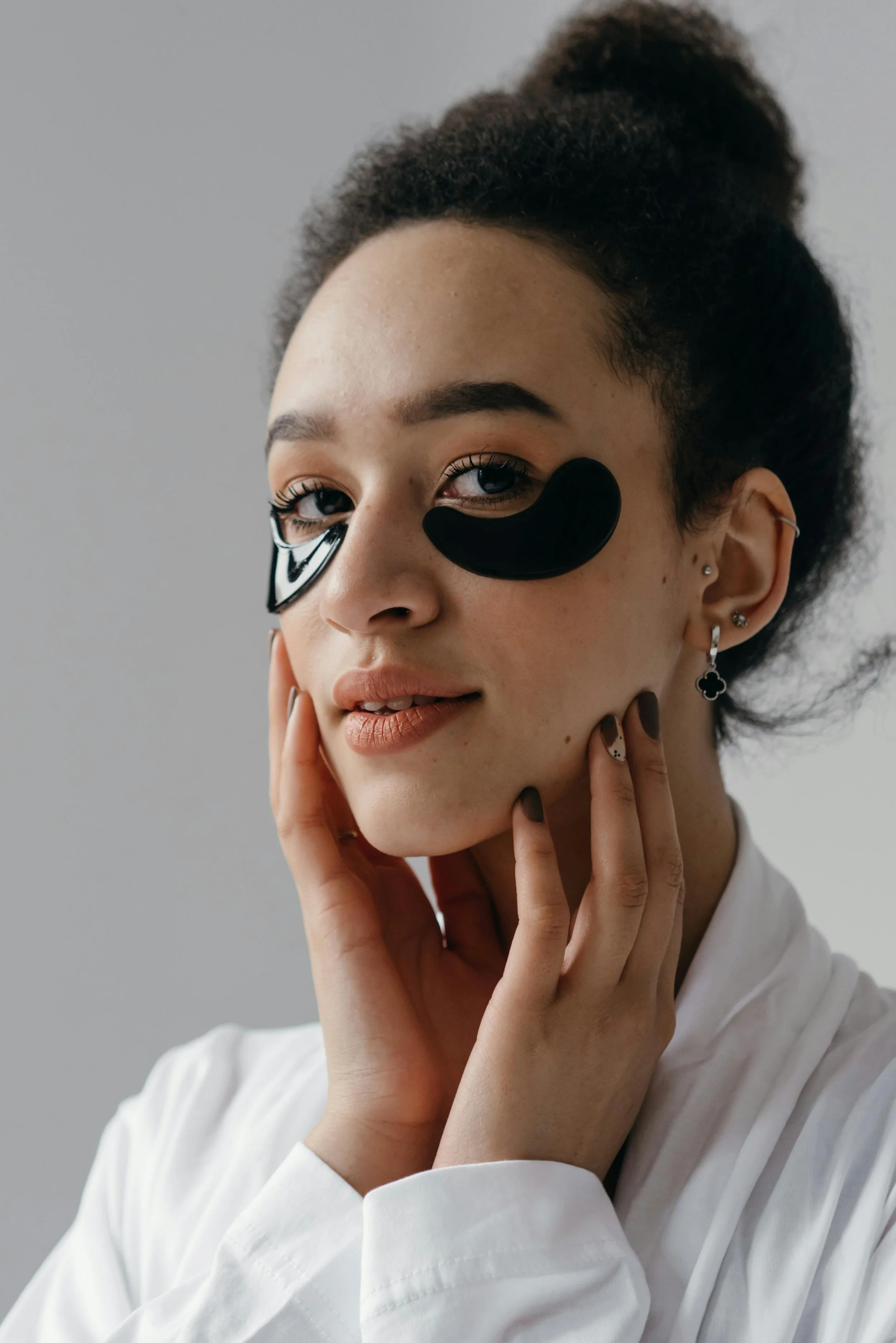
Dark circles are one of the most common concerns I hear about in my practice, and also one of the most consistently misunderstood. Most people reach for concealer, buy a new eye cream, or blame another bad night of sleep. And while sleep absolutely matters, dark circles that persist regardless of how much rest you get, or that seem to deepen over the years, are likely not just a sleep problem.
In Chinese Medicine, the area beneath the eyes is one of the most diagnostically rich regions of the entire face. It reflects the state of an organ system that Western medicine has no direct equivalent for — the "Kidney System" — and what shows up there tells a story that goes back years, sometimes decades, and even may connect to one’s ancestral trauma.
This post is a deep dive into all of it: the Western dermatology explanation, the TCM framework, the surprisingly well-researched link between unprocessed trauma and the kind of chronic low-grade inflammation that quietly depletes the "Kidney energy" over time and, what you can actually do about it all.
What Western Dermatology Says About Under-Eye Circles
Before we go into the Chinese Medicine lens, it's worth understanding what conventional dermatology has identified as the causes of periorbital hyperpigmentation and dark circles.
Research published in the Journal of Cosmetic Dermatology [1] identifies four primary structural mechanisms:
1. Vascular pooling. The skin beneath the eyes is the thinnest skin on the body, sometimes only half a millimeter thick. The tiny capillaries and blood vessels sitting just beneath the surface become visible, creating a blue-purple hue. Fatigue, dehydration, and poor circulation all worsen this, as does anything that increases venous pressure in that area (including chronic sinus congestion and allergies).
2. Periorbital hyperpigmentation. This is a melanin-based darkening that develops with age, sun exposure, and genetic predisposition, and is more pronounced in those with darker skin tones. It is associated with post-inflammatory hyperpigmentation from eczema, rubbing the eyes, and disrupted skin barrier function [2].
3. Structural shadowing. As we lose subcutaneous fat and collagen under the eyes with age, a hollowing occurs. The shadow cast by this depression reads visually as dark — even when the skin tone itself hasn't changed. This is a structural issue, not a pigmentary one, and it deepens over time as "Kidney Yang energy" declines (more on this shortly).
4. Nutritional and systemic causes. Iron deficiency anaemia, zinc deficiency, thyroid dysfunction, and chronic fatigue are all documented contributors to periorbital darkness [3]. These are not cosmetic issues, but rather metabolic ones.
What's important to note is that for many people, all four mechanisms are happening simultaneously, which is why a single eye cream is rarely a meaningful solution.
What Chinese Medicine Sees
Chinese Medicine looks at the same anatomy — the hollowing, the darknening, the puffiness — and reads something equally as systemic, though with a much different lens.
In TCM, every region of the face corresponds to an internal organ system. The area directly below the eyes reflects the state of the Kidneys. When Kidney energy is deficient, whether through depletion, overwork, chronic fear, or simple aging, it shows up here first.
The Kidneys in Chinese Medicine are not simply the organs that filter blood. (*Capitalized to denote the difference between the kidney organs and the "Kidney System".) They are considered the “root of all Yin and Yang” in the body. They house Jing (精), the foundational essence that governs our growth, reproduction, and aging process. Jing is often described as our constitutional battery: partly inherited from our parents at birth, partly replenished through food, rest, and right living. When Jing is abundant, the skin is luminous, the eyes are bright, the lower face is full and lifted. When Jing is depleted, the face hollows, the under-eye darkens, the hair becomes grey, and the lower back aches.
There are two primary Kidney deficiency patterns that produce dark circles, and they look slightly different on the face:
Kidney Yin Deficiency tends to produce a deeper darkness beneath the eyes, sometimes accompanied by dryness, fine lines in the under-eye area, a feeling of heat in the palms and soles at night, and difficulty staying asleep between 2–4am. The face often looks older than the person's years.
Kidney Yang Deficiency tends to produce a more puffiness-plus-darkness pattern often with a bluish-black tone accompanying fluid retention. These individuals often feel cold, especially in the lower body, have low energy in the morning, low libido, and retain water.
Many people present with a combination of both, particularly in midlife.
The Classical Chinese Medicine View: Kidney Energy Over a Lifetime
To understand why Kidney deficiency matters so much for longevity and appearance, we need to go back to the source.
The Huangdi Neijing (黃帝內經),the Yellow Emperor's Classic of Medicine, compiled between approximately 300–100 BCE, describes the natural arc of human vitality in terms of seven-year cycles for women and eight-year cycles for men [4]. This framework is one of the most elegant models of aging in any medical tradition, and it remains clinically relevant today.
For women, the Neijing describes it as follows:
> At age 7, the Kidney energy becomes exuberant, the teeth change, and the hair grows long.
> At 14, the Tiangui (天癸) — the heavenly water, understood as the hormonal essence that governs reproduction — arrives. Menstruation begins.
> At 21, the Kidney energy is balanced and full. Wisdom teeth emerge.
> At 28, the body is at its peak. Tendons and bones are strong, hair long and abundant.
> At 35, the Yangming (stomach and large intestine) channels begin to decline. The face begins to wither. Hair begins to fall.
> At 42, the three Yang channels all weaken. The face withers more noticeably, hair begins to turn.
> At 49, the Tiangui is exhausted. Menstruation ceases. The body can no longer conceive.
For men, the cycle is in eight year increments of decline: peak Kidney energy at 16 (Tiangui), full strength at 32, the first signs of decline at 40, and notable Kidney deficiency at 56.
What this framework illuminates is that dark circles, hollowing beneath the eyes, and a loss of facial luminosity are not aberrations; rather, they are natural consequences of Jing moving through this gradual and natural process of depletion. The question is not how to stop the process, but how to steward it wisely. The Neijing is explicit: those who live in alignment with the Tao, meaning sufficient sleep, regulated emotions, nourishing food, seasonal living, and the cultivation of inner stillness, preserve their Jing far longer than those who do not.
The classical text uses the phrase 腎藏精 — "the Kidney stores Essence" — and elsewhere, 肝腎同源 — "the Liver and Kidney share the same source." This is clinically important. The Liver in Chinese Medicine opens to the eyes; the Kidneys nourish the Liver. When Kidney Jing is depleted, the Liver Blood that feeds the eyes is also compromised, which is why Kidney deficiency and Liver Blood deficiency so often appear together in the under-eye area as simultaneous darkness and dryness. Overuse of the eyes themselves, whether through excessive working, scrolling, or sensory stimulation, is also said to deplete "Liver Blood", contributing to the quickening degeneration of the body. (Learn more about the way the "Liver System" impacts the complexion and can create a dullness in the face in this blog post)
The Lingshu (靈樞), the companion volume to the Suwen, describes the eight extraordinary channels (vessels that carry Jing throughout the body) and their relationship to the face. The Du Mai (督脈), Ren Mai (任脈), and Chong Mai (衝脈) are all rooted in the Kidneys and travel upward through the torso and face. When these vessels are depleted, which can happen for a variety of both physical and psychological reasons including overworking, poor quality sleep, unprocessed trauma, heavy menstruation, improper recovery from pregnancy, excessive ejaculation, and so on, the face loses its root of nourishment, and begins to show the consequences.
The Role of Unprocessed Trauma
This is once of the causes for persistent circles under the eyes that surprises patients, and where the research is more robust than most people expect.
Trauma is not simply a psychological experience. It is a physiological one. And when it goes unprocessed, i.e. when the body never fully completes its stress response, never receives the signal that the threat has passed, it remains embedded in the nervous system, the fascial tissue, and the hormonal axis in ways that cause measurable, ongoing biological harm.
The landmark ACE (Adverse Childhood Experiences) Study, published in the American Journal of Preventive Medicine in 1998 [5], followed over 17,000 adults and found a graded dose-response relationship between the number of childhood adversities experienced and nearly every major chronic disease in adulthood, including autoimmune conditions, cardiovascular disease, and accelerated cellular aging. The more adverse experiences, the more biological disruption, regardless of current circumstances.
Dr. Bessel van der Kolk's foundational work The Body Keeps the Score [6] synthesizes decades of trauma research to show that traumatic memory is stored not abstractly, but somatically in the body's postural patterns, autonomic responses, and chronic inflammatory states. The body remains in a state of low-grade vigilance long after the original threat is gone.
Biologically, unprocessed trauma keeps the HPA (hypothalamic-pituitary-adrenal) axis in a state of chronic dysregulation. A 2015 systematic review and meta-analysis published in Lancet Psychiatry [7] found that people with PTSD had significantly elevated levels of inflammatory markers including C-reactive protein (CRP), interleukin-6 (IL-6), and tumor necrosis factor-alpha (TNF-α), compared to non-traumatized controls. These are not subtle differences. They represent a body that is chronically inflamed, chronically on alert.
This matters for the skin directly. A widely-cited review in Inflammation & Allergy Drug Targets [8] describes what researchers now call the "brain-skin connection" — the bidirectional communication between the central nervous system and the skin via the HPA axis, the autonomic nervous system, and neuropeptide signaling. Chronic psychological stress accelerates skin aging, impairs wound healing, disrupts the epidermal barrier, and depletes the skin of the minerals and growth factors needed for repair. Elevated cortisol, in particular, directly suppresses collagen synthesis, breaks down existing collagen and elastin, impairs microcirculation, and depletes zinc, magnesium, vitamin C, and B vitamins, all of which are required for skin fullness, tone, and repair [9].
Epel et al.'s landmark 2004 study in the Proceedings of the National Academy of Sciences [10] found that chronic psychological stress, including caregiver stress and early life adversity, was associated with significantly shorter telomeres, a direct marker of cellular aging. The women with the highest stress burden had telomeres equivalent to those of women a decade older. This is the body aging faster at a cellular level.
The under-eye area is particularly vulnerable to all of this, because it is already the thinnest skin on the face, already dependent on microcirculation that stress directly impairs, and already closely tied to the organ system (the Kidneys/adrenals) that bears the brunt of chronic stress load.
The TCM View: How Trauma Depletes the Kidneys
In Chinese Medicine, fear is the emotion of the Kidneys. Acute fear — a sudden shock — is said to "scatter the Kidney Qi." Chronic, low-grade fear or anxiety is said to slowly consume the Kidney Jing. The relationship is not metaphorical; it is clinical. Patients who have lived with chronic anxiety, hyper-vigilance, or unresolved shock consistently present with Kidney deficiency patterns: dark circles, lower back weakness, night sweats, early morning waking, hair thinning, and a quality of underlying exhaustion that no amount of sleep seems to fully resolve.
This is because in TCM, the Kidneys govern the adrenal glands (which sit directly on top of the kidneys). Chronic activation of the stress response, the cortisol-adrenaline cascade, over months and years is a direct drain on what the Neijing would call Kidney Yang and, over time, Kidney Jing itself. This is not a distant metaphor. It is a direct parallel to what Western medicine describes as HPA axis dysregulation, adrenal fatigue, and the downstream depletion of DHEA, testosterone, and other steroid hormones that are manufactured from the same precursors as cortisol.
When the adrenals are chronically recruited for survival rather than available for restoration, the downstream effects are precisely what both Chinese and Western medicine describe: thinning skin, poor wound healing, mineral depletion, immune dysregulation, impaired fluid metabolism (leading to puffiness beneath the eyes), and a generalized loss of vitality that shows on the face long before it registers as disease.
Qigong and Lifestyle: How to Preserve Kidney Jing
The Huangdi Neijing is remarkably specific about preservation. The foundational instruction is this: live in alignment with the seasons, protect the Jing from unnecessary expenditure, and cultivate stillness as a form of replenishment. (But how to follow these tips while hustling to achieving massive success?! You may ask…stay tuned for a future blog post on this.)
In practical terms, this translates to the following (some of which are two thousand years old, and all of which have contemporary physiological support):
Sleep before midnight. The Neijing describes midnight as the turning point between Yin and Yang, the moment when the body shifts from expenditure to restoration. Chronic late-night activity is considered one of the most direct ways to deplete Kidney Yin over time. Modern research aligns: sleep between 10pm and 2am corresponds with the deepest phases of HGH (human growth hormone) secretion and cellular repair [11].
Protect the lower back and lower body from cold. The Kidney meridian originates at the sole of the foot (Kidney 1 — 涌泉, Yongquan, "Bubbling Spring") and runs up the inner leg and spine. Cold feet, sitting on cold surfaces, and exposing the lower back are all considered Kidney-depleting in classical texts. Warming the lower body with appropriate clothing, warm foot soaks, wearing slippers or socks on non-carpeted floor, and keeping the mingmen (命門, Gate of Life — the point between the kidneys at the lumbar spine) warm are foundational Kidney-preservation practices. This also includes avoiding excessive "cold foods" (both in temperature and in their effect on the physiology once consumed), such as smoothies, dairy products, and raw salads.
Kidney Qigong. The Ba Duan Jin (八段錦), or Eight Brocades, one of the most widely practiced Qigong forms in history, contains a specific movement, "Two Hands Hold the Feet to Strengthen the Kidneys and Waist", designed to stimulate Kidney Qi through the Du Mai and the Kidney Back-Shu points (膀胱經, Bladder 23). The Six Healing Sounds system includes the Kidney sound "Chui" (吹), practiced with a specific breath and visualization of blue-black water to cleanse and tonify (strengthen) Kidney energy. Research on Qigong practice has documented reductions in cortisol [12], improvements in autonomic balance, and improvements in perceived vitality and sleep quality, all of which correspond to Kidney restoration from a TCM perspective. (Try this Kidney Qigong Practice on my YouTube Channel)
Self-massage of the Kidney Shu points. Rubbing the lower back vigorously with the backs of the hands until warm, a practice described in classical texts and taught in virtually every Kidney Qigong sequence, stimulates the 腎俞 (Shenshu, Bladder 23) points directly, which are said to help regenerate the kidney organs themselves. This is one of the simplest and most accessible practices available, and it can be done in under two minutes each morning.
Nourish with black and dark foods. The Kidneys are associated with the Water element and the color black. Classical dietary medicine emphasizes black sesame seeds (黑芝麻), black beans, seaweed, dark leafy greens, walnuts (which physically resemble the brain, the "sea of marrow" also governed by the Kidneys), goji berries (which are said to nourish Kidney Yin and Liver Blood simultaneously), and bone broth (rich in minerals and collagen precursors that directly support the Jing).
Cultivate stillness and address the emotional root. This is perhaps the hardest and the most important. If the depletion has a trauma root, and for many people it does, no herb or Qigong practice will fully resolve it without also addressing what is held in the body. Somatic therapies, EMDR, breathwork, and trauma-informed movement practices all support the nervous system's ability to complete its stress response and come out of a state of chronic vigilance. In TCM terms, this is the work of calming the Shen (心神) and allowing the Kidneys to stop functioning as a 24-hour emergency generator. (For those located in North Carolina looking for one-on-one support, I see patients one day per week at the Flourish Center for Somatic Healing in Cary, NC. Book here for acupuncture, and check out their page for excellent somatic therapy care)
What Cosmetic Acupuncture Does for Kidney Deficiency
If you want to understand exactly what your under-eye area (and the rest of your face) is telling you about your internal landscape, Class 3 of the Glow From Within series is where we go deep.
In the next upcoming live class, we will unpack what most beauty treatments skip entirely: the face is a diagnostic map. Every region, every line, every area of discoloration or hollowing corresponds to an organ system; and when we treat from that understanding, the results go far beyond what topical products alone can achieve.
In this upcoming class, "The Natural Face Lift" (Class 3), we cover how cosmetic acupuncture works, not just to relax muscles or stimulate collagen, but to move stagnant Qi and Blood in the face and restore circulation to depleted areas, how to read facial patterns as a form of ongoing self-diagnosis, and how the under-eye area, the jawline, the forehead, and the cheeks each carry specific information about what is happening internally.
Beauty, in Chinese Medicine, is never separate from health. The Glow From Within natural beauty masterclass series is where that philosophy becomes a practical skill.
[Bring all your questions about cosmetic acupuncture and natural beauty. Drop in to Class 3 live here; recording available for 2 weeks after class. OR become a Founding Member of the Glow From within series and gain lifetime access to all 5 classes (price increases on June 15) → join the series]
Nourishing the Kidneys From the Inside Out — Food, Herbs & Supplements
If the undereye area is calling for attention, the most powerful long-term intervention is not topical. It is nutritional and herbal, which is exactly what we cover in Class 4 of Glow From Within: Food, Supplements, and Herbs for Glowing Skin and Kidney Health
Some of the Kidney-specific herbs and nutrients we will discuss in class:
He Shou Wu (何首烏) / Fo-Ti — one of the most celebrated Kidney Jing tonics in classical herbalism, traditionally used for hair, skin, and anti-ageing. Modern research has investigated its effects on telomerase activity and cellular longevity.
Shu Di Huang (熟地黃) / Prepared Rehmannia — the foundational Kidney Yin tonic in Chinese medicine. Used in the classical formula Liu Wei Di Huang Wan (六味地黃丸 — Six Flavor Rehmannia Pill), which remains one of the most prescribed herbal formulas globally for Kidney Yin deficiency.
Gou Qi Zi (枸杞子) / Goji Berries — nourish both Kidney Yin and Liver Blood, directly addressing the Kidney-Liver axis that governs eye health and under-eye appearance. Rich in zeaxanthin and betaine.
Nu Zhen Zi (女貞子) / Ligustrum — a cooling, restorative Kidney Yin tonic often paired with Han Lian Cao (旱蓮草 / Eclipta) in the classical formula Er Zhi Wan (二至丸), one of the simplest and most elegant Kidney Yin formulas in the classical canon.
On the Western nutrition side: zinc (essential for collagen synthesis, immune regulation, and wound healing — frequently depleted by chronic stress), iron (anaemia is a direct cause of periorbital darkness), magnesium (depleted by cortisol and essential for sleep and HPA axis regulation), collagen peptides with vitamin C (supporting the structural fullness of the undereye area), and omega-3 fatty acids (reducing systemic inflammation and supporting skin barrier integrity).
Class 4 goes into the research, the dosing, the food sources, and how to think about building a supplement and herbal medicine regimen that actually matches your constitution and unique symptom presentation, rather than following a generic protocol that may not suit your body.
[I’ll be providing discounted supplement links to all participants; Join Class 4 here → link]
The Bigger Picture
Dark circles are, in one sense, a small cosmetic concern. In another sense, they are a window into how you have been living...how much you have rested, how much you have pushed, what you have carried without support, and where the body has quietly been spending reserves it cannot afford to keep spending.
The beautiful thing about Chinese Medicine is that it offers not just a diagnosis, but a direction. Kidney deficiency is not a verdict. It is an invitation: to sleep earlier, to eat more "Kidny-nourishing" foods, to practice Qigong or other mind-body awareness practices, to bring warmth to the lower half of the body, and to address what the nervous system is still holding. The face will respond, not overnight, but over time, in the way that all genuine restoration works: slowly, from the root.
In Chinese Medicine, the under-eyes are the window to understanding the speed at which you are depleting your "root", the Kidneys, and through this understanding, the Kidney health reveals the whole arc of how you have lived, and how you choose to live now.
About the Author
Dr. Sinéad Corrigan is a Doctor of Acupuncture and Chinese Medicine, Licensed Acupuncturist, Board Certified Herbalist, and somatic movement instructor based in Chapel Hill, NC, Kauaʻi, HI, and [soon] Miami, FL. She offers in-person appointments as well as telemedicine, and has an On Demand Qigong + Yoga platform and YouTube channel for those who want guided embodiment practices rooted in Chinese medicine at home.
Connect with Dr. Sinéad ~ Empower yourself with Inner Body Data™
Explore theOn Demand Membership
[1] Freitag FM, Cestari TF. "What causes dark circles under the eyes?" Journal of Cosmetic Dermatology. 2007;6(3):211-215. https://doi.org/10.1111/j.1473-2165.2007.00324.x
[2] Ranu H, Thng S, Goh BK, Burger A, Goh CL. "Periorbital hyperpigmentation — overview of etiopathogenesis and current management options." Journal of Cutaneous and Aesthetic Surgery. 2011;4(3):149-160. https://doi.org/10.4103/0974-2077.91251
[3] Sarkar R, Ranjan R, Garg S, Garg VK, Sonthalia S, Bansal S. "Periorbital hyperpigmentation: a comprehensive review." The Journal of Clinical and Aesthetic Dermatology. 2016;9(1):49-55. https://www.ncbi.nlm.nih.gov/pmc/articles/PMC4756872/
[4] Unschuld PU (translator). Huangdi Neijing Suwen: Nature, Knowledge, Imagery in an Ancient Chinese Medical Text. University of California Press, 2003. Chapter 1 (上古天真論).
[5] Felitti VJ, Anda RF, Nordenberg D, et al. "Relationship of childhood abuse and household dysfunction to many of the leading causes of death in adults: the Adverse Childhood Experiences (ACE) Study." American Journal of Preventive Medicine. 1998;14(4):245-258. https://doi.org/10.1016/S0749-3797(98)00017-8
[6] van der Kolk BA. The Body Keeps the Score: Brain, Mind, and Body in the Healing of Trauma. Viking, 2014.
[7] Passos IC, Vasconcelos-Moreno MP, Costa LG, et al. "Inflammatory markers in post-traumatic stress disorder: a systematic review, meta-analysis, and meta-regression." Lancet Psychiatry. 2015;2(11):1002-1012. https://doi.org/10.1016/S2215-0366(15)00309-0
[8] Chen Y, Lyga J. "Brain-skin connection: stress, inflammation and skin aging." Inflammation & Allergy Drug Targets. 2014;13(3):177-190. https://doi.org/10.2174/1871528113666140522104422
[9] Ganceviciene R, Liakou AI, Theodoridis A, Makrantonaki E, Zouboulis CC. "Skin anti-aging strategies." Dermato-Endocrinology. 2012;4(3):308-319. https://doi.org/10.4161/derm.22804
[10] Epel ES, Blackburn EH, Lin J, et al. "Accelerated telomere shortening in response to life stress." Proceedings of the National Academy of Sciences. 2004;101(49):17312-17315. https://doi.org/10.1073/pnas.0407162101
[11] Van Cauter E, Leproult R, Plat L. "Age-related changes in slow wave sleep and REM sleep and relationship with growth hormone and cortisol levels in healthy men." JAMA. 2000;284(7):861-868. https://doi.org/10.1001/jama.284.7.861
[12] Jahnke R, Larkey L, Rogers C, Etnier J, Lin F. "A comprehensive review of health benefits of qigong and tai chi." American Journal of Health Promotion. 2010;24(6):e1-e25. https://doi.org/10.4278/ajhp.081013-LIT-248